Present-day digital shopping is not just about browsing. It’s more about engagement, testing, and choosing with confidence. The moment a shopper lands on a site, the goal is to drive product discovery that leads to conversions.
Yet, many brands still struggle with showing the right products to the right people at the right time. This is where virtual try on, product discovery, and average order value come together to solve a real problem.
Forrester Research shows that visual commerce tools can uplift conversion by up to 40% when implemented well. With competition rising and consumer expectations shifting, brands that use virtual try on improve product discovery and boost average order value, are winning more loyal customers and higher-value orders.
This blog walks you through why product discovery matters, why average order value matters, and how virtual try on is the modern solution to help you grow both. So, if you want results that are backed by data and practice, you are in the right place.
Why Product Discovery Matters
Product discovery is the process by which a shopper finds the products they need. In physical stores, a shopper walks the aisles. Online, a shopper scans through categories, filters, and searches. The easier it is for someone to find the right item quickly, the more likely they are to buy.
Challenges in Digital Commerce
Present-day online shoppers are overwhelmed with choices. Too many options without clarity lead to decision fatigue. According to a survey by McKinsey, more than sixty percent of shoppers give up when they cannot find the product they want quickly. This means lost sales and wasted marketing spend.
Learn how iAugment virtual try on brings jewelry to life.
Turn browsing into bigger baskets with Virtual Try-On
Why Product Discovery Matters
Product discovery is important because it:
- Reduce bounce rates
- Improves conversion rates
- Makes the browsing journey intuitive
- Builds trust in your brand
When product discovery is weak, shoppers leave without buying it. When it is strong, shoppers stay, explore, and buy more.
Research by Salesforce shows that businesses with strong product discovery strategies grow revenue faster than competitors. They see up to a twenty-five percent increase in online revenue. This matters because online shopping behavior has a shorter attention span and higher expectations. Shoppers want relevant results fast.
How to Improve Product Discovery
Product discovery is not a single tactic. It is a combination of tools and strategies that reduce friction and make exploration easy.

1. Improving Search Relevance
Search is the backbone of discovery. When a shopper types a term, you need relevant results.
- Use smart search technology that understands synonyms, common misspellings, and related terms.
- Add filters that make it easy to narrow results by size, color, category, and price.
- Display high-quality product visuals and quick view options so shoppers can scan faster.
Better search relevance means visitors find what they want first. This reduces frustration and increases the chance they move deeper into your catalog.
Understand how to enrich customer experience with virtual try on solutions in Japan.

2. Encourage Exploration
Discovery happens when shoppers feel invited to explore.
- Feature trending collections on the homepage.
- Use recommended items based on popular combinations.
- Group products in curated lists like “Top Picks for Her” or “Best Sellers This Week.”
These types of cues help shoppers uncover products they didn’t know they wanted. That leads to higher engagement and more browsing time.

3. Personalization
Personalization is a key part of modern product discovery.
- Show products based on past browsing history.
- Use dynamic recommendations for similar items
- Customize homepage banners and category placements based on user segments.
Personalized product suggestions make the shopping experience feel like it was created for that visitor. That builds confidence and keeps people browsing longer.
Why Average Order Value Matters
Average order value (AOV) is the average amount a customer spends in a single purchase. It is a key business metric because increasing AOV means higher revenue without increasing traffic.
Study phygital solutions in retail: from smart stores to virtual showroom
Business Impact of AOV
When AOV rises, marketing becomes more profitable. For example, if your AOV increases by just 10%, your fixed value of traffic gets a bigger return. This reduces the pressure on acquisition costs and increases the margin.
As per data from Adobe Digital Insights, merchants who use personalization and recommended purchase methods see up to a 15% increase in average order value. This is because shoppers discover items they might not have considered otherwise.
AOV is also tied to customer satisfaction. When shoppers buy more of what they truly want, they are happier with their purchase. This leads to repeat visits and loyalty.
How to Boost Average Order Value
Boosting AOV is not a single action. It is a set of tactics that encourages shoppers to spend more time during a visit.

1. Increase Confidence and Reduce Returns
Shoppers hesitate when they are not sure about fit, look, or quality. This hesitation lowers basket size. Reducing returns raises confidence and keeps AOV steady.
- Use high-quality visuals and detailed descriptions.
- Add product comparison tools so shoppers understand differences.
- Offer size guides and fit help to set correct expectations.
These elements reduce returns and increase customer confidence.
Find out the top phygital trends that are reforming retail and eCommerce

2. Facilitate Cross and Upselling
Cross-selling and upselling are proven strategies to grow order value.
- Show complementary products like shoes with a dress or a belt with pants.
- Suggest premium versions of the product the shopper is looking at.
When done right, these suggestions feel helpful rather than pushy.

3. Driving Conversion Rates
Driving conversions is about guiding the shopper to checkout.
- Use exit intent offers that suggest add-ons.
- Bundle related products at a small discount to encourage larger purchases.
- Offer free shipping thresholds that incentivize higher spend.
These tactics make the shopper feel rewarded for spending more.
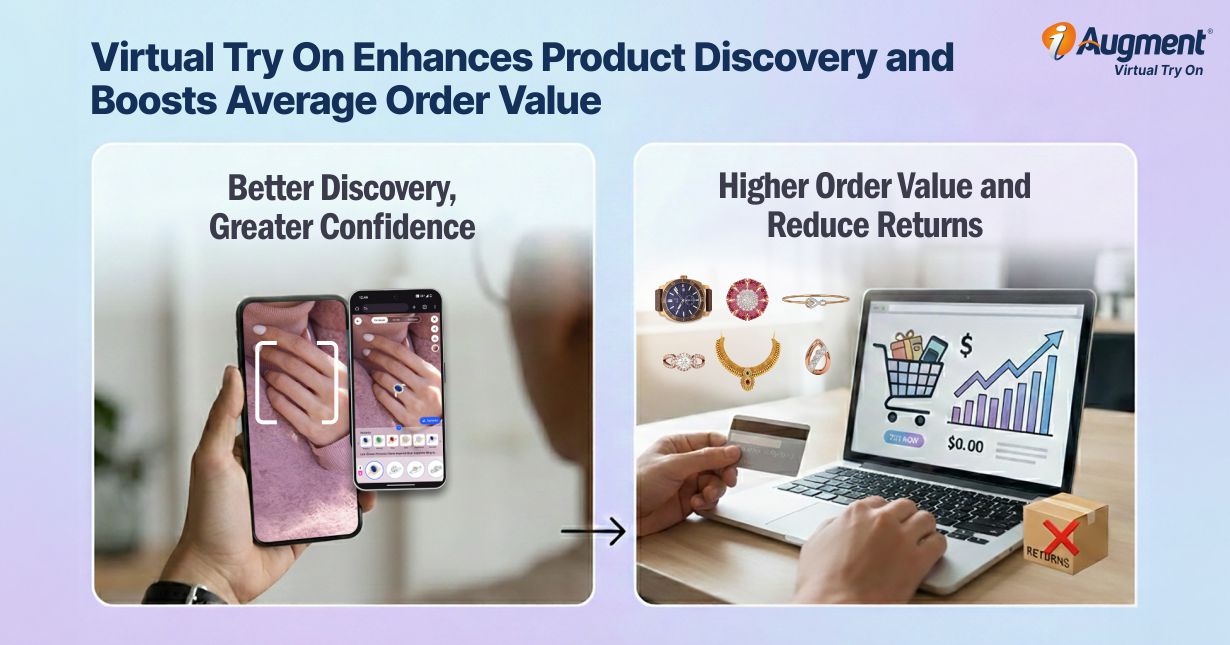
How Virtual Try On Enhances Product Discovery and Boosts Average Order Value
Now that we have covered why product discovery and AOV matter, let us look at how virtual try on amplifies both. Virtual try on is a product discovery tool that lets shoppers test products digitally before purchasing. This leads to better decisions, fewer returns, and larger baskets.
In my years of experience, I have seen virtual try on do wonders for clients. When integrated into the shopper journey rather than treated as a separate feature. When every touch point uses this tool in meaningful ways, brands see measurable uplift in discovery, confidence, and purchase value.
Discover the difference between CX and UX.
Here are the key ways virtual try on drives results.

1. Help in Marketing
When it comes to marketing, no other form can beat word of mouth. It builds confidence, and shoppers who have a fun, interactive experience are more likely to share their experience with others.
Virtual try on turns product discovery into an engaging activity. People share their virtual try on experiences and images on social media with friends. This spread awareness organically. When people see real examples of how a product looks at someone like them, curiosity and trust rise.
This type of social proof makes new visitors more likely to engage and explore products themselves.

2. Personalization
Virtual try on creates personal experiences at scale. Instead of generic product imagery, shoppers see how products look on them. This personalization increases relevance and accelerates discovery.
When a shopper feels a product suits them, they are more likely to add it to the cart and explore similar items. Virtual try on data can power next-level personalization:
- Present products based on what was tried on or viewed.
- Suggest color or style variations that fit user preferences.
- Highlight complete looks based on earlier virtual try ons.
Personalized discovery means less guesswork and faster purchase decisions.
Learn about video commerce and why it’s important for eCommerce.

3. Make Shopping Experience More Engaging
Engagement is the first step toward conversion. Virtual try on turns static browsing into interactive shopping. Instead of looking at flat photos, shoppers see products on themselves or models that resemble their body type. This moves them from watching to participating.
Engaged shoppers stay longer, view more products, and are more open to exploring collections they might not have considered. Engagement also reduces bounce rates. When people interact with tools, they absorb product information more deeply.

4. More Assertive Shopping
Assertive shopping is when a visitor feels confident about their choice. Virtual try on removes uncertainty. Shoppers often hesitate because they are unsure if a product fits their style or body. Virtual try on closes this gap by simulating real life.
When someone sees a product on themselves, they make choices faster and with greater conviction. Assertive decision making leads to larger baskets because:
- Shoppers add products they feel confident about.
- They are willing to buy items beyond their initial plan.
- They believe they made the right choice before checkout.

5. More Conversion and Increased Order Value
When product discovery is powerful, and shopping is engaging, conversion rates rise. But the impact does not stop there. Virtual try on influences order value directly because:
- Shoppers buy more items when they can test multiple products quickly.
- Confidence in fit and look reduces hesitation to add complementary items.
- Virtual try on suggestions often lead to add-on purchases.
This creates a scenario where visitors not only convert more often but also spend more per visit.
Know why an omnichannel retail solution is perfect for business.

6. Insights and Data
One of the biggest advantages of virtual try on is the data it generates. Unlike basic product clicks, virtual try on interactions reveal intent. Brands learn:
- Which products are tried most often?
- Which combinations get added to carts?
- What parts of the experience lead to a drop off?
These insights help refine merchandising, promotions, and assortment decisions. For example, if a show style is tried often but not bought, there may be pricing or inventory lessons to be learned.

7. Bringing in Personal Experience Online
From my experience, brands that treat virtual try on as a strategic initiative rather than a technical feature see the best results. For example:
- A fashion retailer integrated try on across mobile and desktop. They noticed 30% more products viewed per session.
- A beauty brand used virtual try on as part of their homepage experience. Their product discovery increased by 25%, and they saw average order value rise by 15% within months.
The reason these results happen is simple: virtual try on makes shopping feel like discovery and not a chore.
Conclusion
In a world where online shoppers have short attention spans and high expectations, virtual try on has emerged as a critical product discovery tool that also helps boost average order value. It improves the way people interact with your catalog, it answers the questions shoppers already have, and it gives them confidence to buy more and buy faster.
For businesses, virtual try on is not just a novelty. It is a strategic tool that drives engagement, reduces returns, increases conversions, and lifts the bottom line. When executed with focus, it improves every stage of the shopping journey.
If you want to grow your online revenue by improving product discovery and raising average order value, virtual try on is a solution worth investing in. Your customers will thank you with longer sessions, larger carts, and repeat visits.
Frequently Asked Questions
Q. How does virtual try on improve product discovery?
Virtual try on improves product discovery by turning passive browsing into active exploration. Shoppers interact with products instead of only viewing images. This interaction helps them discover relevant styles, variants, and complementary products faster and with more clarity.
Q. Why is product discovery critical for online businesses?
A. Product discovery is critical because shoppers abandon websites when they cannot find relevant products quickly. Strong product discovery reduces bounce rates, increases engagement, and moves users deeper into the catalog, which directly supports higher conversions and revenue growth.
Q. How does virtual try on influence average order value?
Virtual try on increases average order value by building shopper confidence. When customers feel confident about how a product looks or fits, they are more willing to add multiple items to the cart, explore add-ons, and purchase premium options.
Q. Can virtual try on reduce product returns?
A. Yes. Virtual try on helps set accurate expectations before purchase. When shoppers understand fit, size, or appearance better, return rates decline. Lower returns also support a stable average order value and higher profitability.
Q. Does virtual try on impact conversion rates?
A. Yes. Virtual try on improves conversion rates by reducing uncertainty. When shoppers see products on themselves, hesitation decreases. This clarity accelerates the path to checkout and leads to more completed purchases.