The customer purchase decision has completely reformed in the last decade than in the previous five decades. Buyers no longer depend on store visits, sales staff, or static product images to decide what to buy.
Today, digital-first customers want clarity, confidence, and control before they spend. According to global retail studies, more than 70% of shoppers hesitate to complete an online purchase, especially high-value items, because they cannot fully visualize the product in real time.
This hesitation directly impacts conversion rates, cart abandonment, and return volumes. This is where virtual try on technology enters the picture. As digital retail shopping becomes more competitive, brands are under pressure to replicate the certainty of physical shopping within online environments.
Customers want to experience products before they purchase them. This blog will explore how virtual try on strengthens the customer purchase decision at every stage of the buying journey. We will look at the evolution of shopping and key factors that make virtual shopping more persuasive and profitable.
Evolution of Shopping
Shopping has always been a sensory experience. In traditional retail, customers relied on touch, sight, and assistance from store staff to validate their buying choices. The rise of eCommerce introduced convenience, wider product access, and price transparency.
However, it also created a confidence gap. Customers could not try products before buying, which increased uncertainty and post-purchase regret. As digital retail shopping matured, brands focused on better visuals, reviews, and mobile optimization.
Yet research consistently shows that static product pages still leave buyers with unanswered questions. A 2023 retail behavior report found that over 60% of customers want more interactive tools when shopping online.
Learn about video commerce and why it is important for eCommerce.
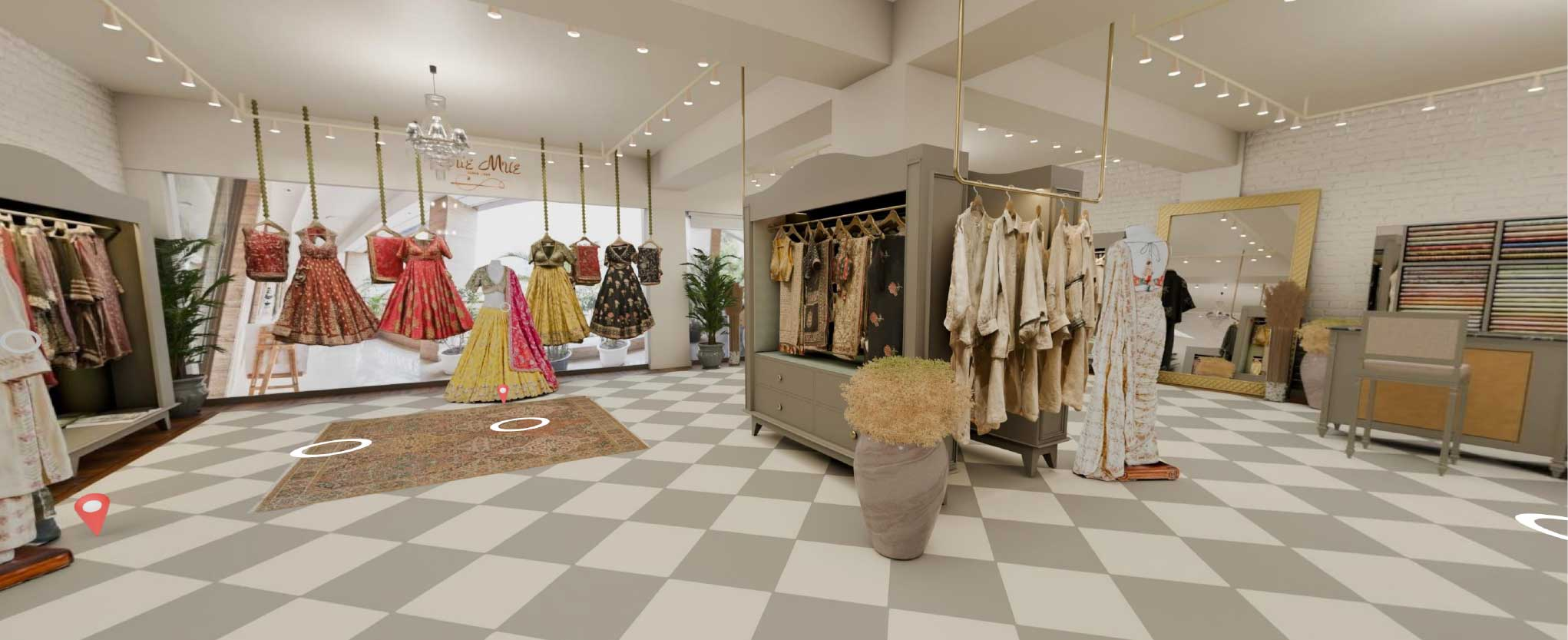
This shift explains why virtual shopping experiences are now gaining traction across jewelry, watches, eyewear, and more. The modern shopper moves fluidly between online and offline environments.
They may discover a product on social media, research it on the website, try it digitally, and then complete the purchase either online or in-store. Virtual try on plays a critical role in this hybrid journey by merging physical evaluation with digital convenience.
It allows brands to bring the fitting rooms, showroom, or demo experience directly to the customer’s screen. This evolution is not about replacing stores. It is about improving decision quality wherever the customer chooses to buy.
Brands that invest in immersive tools see higher engagement, longer session times, and stronger buying intent because customers feel informed rather than pressured.
Key Factors Strengthening Customer Purchase Decision
Customer purchase decisions are influenced and strengthened by the following key factors:

1. Increase Purchase Confidence
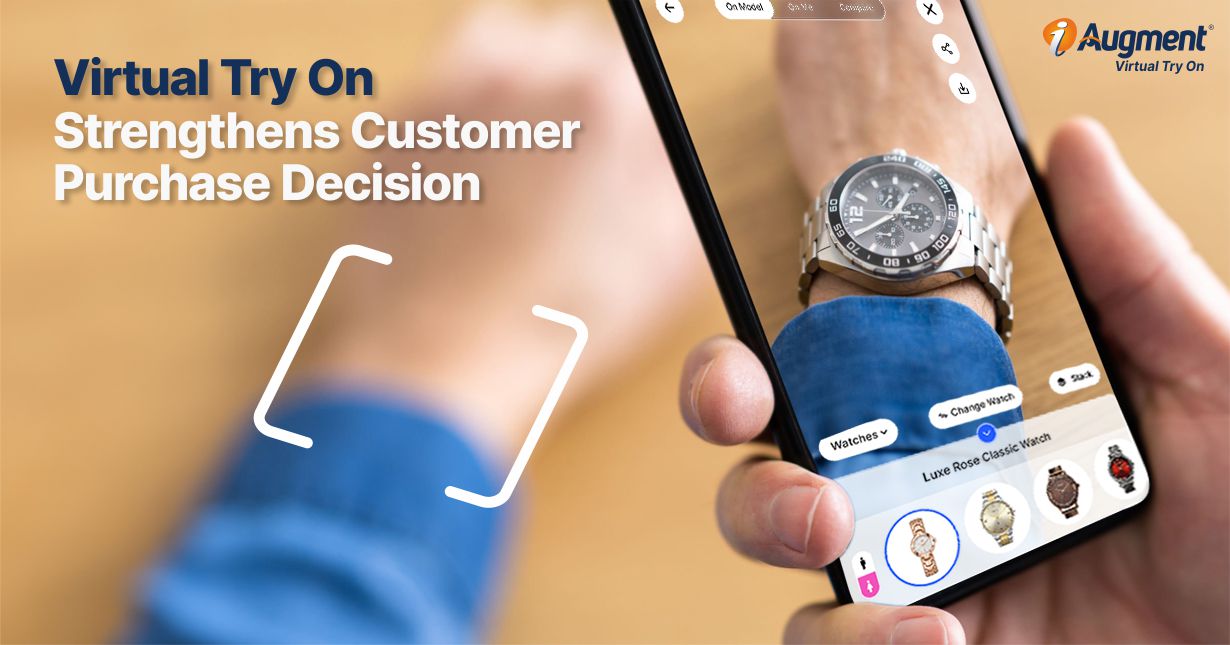
Confidence is the foundation of every customer’s purchase decision. When buyers know what to expect, they feel comfortable moving forward. Virtual try on gives customers visual confirmation of how a product looks or fits in real time.
This is especially important for categories where appearance and personal fit influence satisfaction. Studies show that shoppers using virtual try on tools are up to three times more confident in their selections compared to those who rely on images alone.
Find out the top phygital trends that are reforming retail and eCommerce.
This confidence reduces hesitation and builds emotional readiness to buy. In digital experience-driven commerce, confidence replaces guesswork, which directly improves conversion rates.
2. Reduced Perceived Risk and Returns
Perceived risk is one of the biggest barriers in digital retail shopping. Customers worry about size issues, color mismatch, or product suitability. Virtual try on reduces this uncertainty by setting realistic expectations before checkout.
Retail data indicates that brands using virtual try on report return rate reductions ranging from 20 to 40%, depending on the category. Fewer returns not only protect margins but also improve brand trust.
When customers receive what they expected, they are more likely to buy again and recommend the brand. This risk reduction plays a major role in shaping the customer’s purchase decision, especially for premium or high-consideration products.
Understand why customer experience is important for a phygital solution.


3. Improved Product Understanding
A well-informed buyer is a decisive buyer. Virtual try on helps customers understand scale, proportions, and context. Instead of imagining how a product might look, customers see it applied to themselves or their environment.
This level of clarity improves virtual shopping by answering questions visually rather than through long descriptions. Research shows that interactive product visualization increases product understanding by over 65% compared to static listings. When customers understand what they are buying, decision friction drops sharply.
4. Offer a Personalized and Interactive Experience
Modern buyers expect interaction, not presentation. Virtual try on creates a two-way digital experience where customers actively explore products instead of passively scrolling. They can test variations, compare options, and see instant results.
This interactivity strengthens emotional connection and keeps customers engaged longer. In many cases, session durations double when virtual try on features are used. A richer digital Cx helps customers feel involved, which increases commitment to their choice and reduces second-guessing.
Study why an omnichannel retail solution is perfect for your business.


5. Facilitates Faster Decision Making
Too many options often slow down decision-making. Virtual try on speeds up the process by narrowing choices visually. Customers can quickly eliminate options that do not suit them and focus on what works.
Retail analytics show that customers using virtual try on complete purchases faster than those who do not. This is critical in competitive eCommerce environments where attention spans are short. Faster decisions lead to higher throughput without sacrificing satisfaction. For brands focused on growth, this efficiency directly improves revenue per visitor.
6. Leverages Social Proof
Social proof strongly influences the customer’s purchase decision. When buyers see how products look on real people, not just models, credibility increases. Many virtual try on platforms to integrating user-generated content, ratings, and share features.
Customers trust visual validation from peers more than brand messaging. This trust translates into higher conversion rates and stronger brand advocacy. In digital retail shopping, social proof combined with immersive visuals creates a powerful persuasion engine.
Phygital solution is a complete package for your eCommerce store.


7. Bridges the Online-Offline Gap
One of the biggest challenges in virtual shopping is the disconnect between digital browsing and physical experience. Virtual ty on closes this gap by replacing in-store evaluation digitally. Customers can explore products online and feel confident visiting a store or completing an online purchase.
Retailers using omnichannel virtual try on solutions report higher store visits and better cross-channel consistency. This alignment improves the overall digital cx and strengthens long-term loyalty.
8. Help in Perceiving Product Value
Value perception goes beyond price. Customers assess quality, relevance, and fit before committing. Virtual try on helps customers see how a product complements their identity or needs, which improves perceived value.
When buyers clearly see benefits, they are less price-sensitive. Brands often report higher average order values after introducing virtual try on because customers are willing to invest in products that feel right. This shift directly supports revenue growth while reinforcing the customer purchase decision.
Discover how a virtual showroom creates an immersive experience in real estate.

Boost Sales by Mastering Purchase Decisions Fast
Strategic Role of Virtual Try On in Modern Commerce
For business leaders and decision makers, the question is no longer whether immersive tools matter, but how to deploy them effectively. Virtual try on addresses a core challenge in digital retail shopping, which is trust.
By reducing uncertainty, improving clarity, and boosting engagement, it influences buying behavior at scale. Brands exploring how to enhance customer purchase decisions often focus on discounts or messaging.
While pricing strategies matter, experience-driven confidence has a longer-lasting impact. Virtual try on builds trust before the transaction, not after the sale. It also plays a central role in how virtual try on enhances customer journey by supporting discovery, evaluation, and validation in a single flow. This continuity reduces drop-offs and increases lifetime value.
Understand how iAugment virtual try on brings jewelry to life.
Conclusion
Virtual try on has moved from an experimental feature to a strategic growth driver. It strengthens the customer purchase decision by increasing confidence, reducing risk, and improving clarity across the buying journey.
In a market where attention is limited and expectations are high, immersive experiences differentiate brands that grow from those that struggle. If your focus is scaling revenue, virtual try on offers a measurable impact.
It improves conversion rates, lowers returns, enhances digital Cx, and supports smarter virtual shopping strategies. As digital retail shopping continues to evolve, brands that invest in meaningful digital experience tools will stay ahead of changing customer behavior.
The future of commerce belongs to brands that help customers decide with confidence. Virtual try on does exactly that.
Frequently Asked Questions
Q. How does virtual try on influence the customer purchase decision in digital retail shopping?
A. Virtual try on directly improves the customer purchase decision by replacing uncertainty with visual clarity. Customers can see how a product looks, fits, or aligns with their preferences before buying. This reduces guesswork and emotional hesitation. In digital retail shopping, this visual validation builds trust and shortens the evaluation phase, which leads to higher conversion rates and fewer abandoned carts.
Q. How does virtual try on help businesses reduce product return rates?
A. Product returns often happen when customer expectations do not match reality. Virtual try on sets realistic expectations by showing accurate product appearance, scale, and fit before checkout. Customers make better-informed choices, which lowers dissatisfaction after delivery. Many retailers see a noticeable drop in return volumes once virtual try on becomes part of their digital experience.
Q. Why do customers feel more confident when using virtual shopping tools?
A. Confidence comes from understanding. Virtual shopping tools allow customers to interact with products instead of relying on imagination. Seeing a product applied to themselves or their environment creates certainty. This sense of control reduces perceived risk and reassures buyers that they are making the right choice, which strengthens their willingness to complete the purchase.
Q. How does virtual try on support omnichannel digital retail shopping strategies?
A. Virtual try on connects online discovery with offline buying and vice versa. Customers can explore products digitally, validate their choice, and then purchase through their preferred channel. This continuity creates a consistent digital Cx across touchpoints. Brands benefit from stronger engagement, higher store visit intent, and smoother transitions between channels
Q. Is virtual try on suitable for enterprise-level digital retail shopping platforms?
A. Yes, virtual try on is highly suitable for enterprise platforms. It scales across large catalogs, supports high traffic volumes, and integrates with existing ecommerce systems. For enterprises focused on growth, it improves decision quality, lowers operational costs from returns, and strengthens brand credibility. It also supports long-term digital retail shopping strategies by aligning experience with customer expectations at scale.