Home » How Digital Business Cards are Different from Traditional Business Cards
How Digital Business Cards are Different from Traditional Business Cards
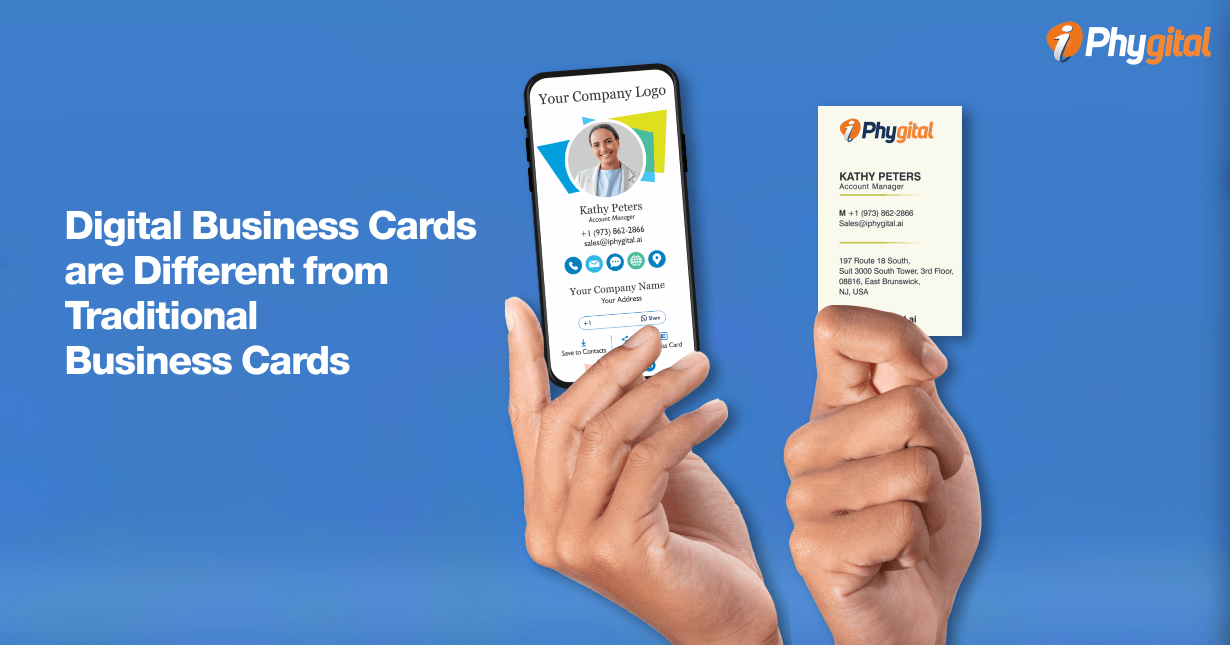
Digital Business Cards vs Traditional Business Cards
Networking has undergone a significant transformation in today’s fast-paced world. Gone are the days when exchanging traditional paper business cards was the norm. With the rise of digital business cards, networking has become more efficient and dynamic.
In this blog, we will explore the fundamental differences between traditional and digital visiting cards. It displays their respective pros and cons.
What is a Traditional Business Card?
A traditional business card is a physical card typically made of paper. It shows essential contact information such as name, job title, company name, phone number, and email address. These smart business cards have been a staple of professional networking and allow individuals to exchange information quickly during face-to-face interactions.
Let’s move ahead and learn the pros and cons of traditional business cards to understand them better.
Traditional business cards can someone’s eye instantly. During in-person meetings or networking events. An elegantly designed business card grabs attention through bold colours, unique textures, or creative layout to reduce the changes of dumping.
Establishes Personal Connection
Exchanging physical cards can foster a sense of personal connection between individuals, especially when accompanied by a handshake or brief conversation. This distinctive touch can leave a memorable impression and lay the foundation for future business relationships.
Due to space constraints, traditional business cards often contain limited information, making it challenging to provide comprehensive details about oneself or one’s business. This hinders the effectiveness of networking by preventing recipients from gaining a complete understanding of the cardholder.
Easily Misplaced
Physical cards can be misplaced or lost, leading to missed networking opportunities for follow-up or communication, as recipients may struggle to recall the details of the person who provided the card. Their physical nature makes them prone to being overlooked or discarded inadvertently.
Outdated Information
Changes in contact information or job roles require the printing of new cards, rendering existing ones obsolete. The need to continually reprint cards to reflect updated information can also incur additional time and expense for individuals or organizations.
Traditional business cards are primarily useful for in-person networking and may not reach individuals outside of physical meetings or events. In an increasingly globalized business landscape, the inability to connect with contacts remotely can limit the reach and effectiveness of business cards.
Expensive
Designing and printing traditional business cards can incur significant costs, especially for high-quality designs or speciality finishes. Additionally, the investment in traditional cards may yield diminishing returns as digital alternatives offer more cost-effective and versatile solutions for networking and communication.
What are Digital Business Cards?
Digital business cards, also known as smart business cards or electronic business cards, are virtual representations of traditional business cards. They can be shared and exchanged digitally via various platforms and devices, offering several advantages over their physical counterparts.
Let’s learn more about these digital visiting cards by studying their pros and cons.
Digital visiting cards can be shared instantly via email, messaging apps, or social media platforms, facilitating quick and efficient networking. With just a few clicks smart business card holders can effortlessly exchange their contact information to enhance communication and collaboration.
Easy to Update
Unlike traditional cards, digital business cards can be easily updated to reflect changes in contact information or other details. This ensures that recipients always have access to the most accurate and updated contact details to simplify communication and minimize errors.
Interactive Elements
Digital business cards can incorporate interactive elements such as clickable links, social media profiles, and multimedia content, making them more engaging and informative. Multimedia content such as videos, images, and audio clips further enrich the digital experience and allow individuals to display their work, projects, or products efficiently.
Reach with Automated Translation
Digital business cards can be translated into multiple languages automatically, expanding their reach to a global audience. This feature improves accessibility and inclusivity, permitting individuals to connect with contacts from diverse linguisticbackgrounds.
In an era where contactless interactions are preferred, digital business cards offer a safer alternative to physical exchanges. This contactless sharing feature aligns with current hygiene protocols and contributes to a safer networking environment for all involved.
Multimedia Integration
Digital visiting cards allow for the integration of multimedia content such as videos, images, and audio clips, enabling individuals to display their work or products more effectively. Multimedia content such as videos, images, and audio clips further enrich the digital experience and allow individuals to display their work, projects, or products efficiently.
Turn First Impressions into Business Opportunities
Cons of Digital Business Cards
1. Not Accessible to All:
Not everyone may have access to digital devices or be comfortable using digital platforms. It limits the effectiveness of digital visiting cards in certain contexts, particularly in environments where digital literacy is low, or technology resources are scarce.
2. Lacking in Personal Touch:
Digital exchanges may lack the personal touch and intimacy of face-to-face interactions, potentially diluting the impact of networking efforts. While digital business cards offer convenience and efficiency, they may not evoke the same level of warmth or authenticity as physical exchanges accompanied by a handshake or brief conversation.
3. Risky:
Digital business cards run the risk of being lost or overlooked in crowded email inboxes or spam folders. This risk underscores the importance of strategic email management and follow-up strategies to ensure that digital visiting cards are received and acknowledged by recipients.
Tedious Task:
Creating and managing digital business cards can be a time-consuming process, especially for individuals unfamiliar with digital tools or platforms. Additionally, updating digital visiting cards regularly to reflect changes in contact information or other details can add to the administrative workload, particularly for busy professionals.
Digital business cards shared via email may not always be opened or may get blocked by spam filters, reducing their visibility and effectiveness. To overcome these challenges, electronic business card holders must employ effective email communication strategies and follow-up tactics to ensure that their messages are received and acted upon.
Explore how digital business cards offer instant sharing, eco-friendliness, and modern networking advantages.
Comparison Chart between Digital Business Cards and Traditional Business Cards
Conclusion
In conclusion, while traditional business cards have served as a reliable networking tool for decades, the emergence of digital visiting cards offers a more dynamic and efficient alternative.
With features and a plethora of elements digital business cards provide numerous benefits that traditional cards cannot match. By embracing digital networking solutions, individuals can enhance their professional presence, expand their reach, and stay ahead in today’s competitive business landscape.
So, whether you are attending a conference, meeting a new client, or connecting with colleagues, consider making the switch to digital business cards for a smarter networking experience.
Frequently Asked Questions
Q. How are digital business cards better than traditional cards?
Digital business cards are easy to update, instantly shareable, interactive, and more cost-effective than printed cards.
Q. Can I update my digital business card anytime?
Yes, you can update your contact details, links, and information anytime without reprinting anything.
Q. Can digital business cards include social media links?
Yes, digital cards can include social profiles, websites, videos, portfolios, and other clickable links.
Q. Is a digital business card expensive to create?
No, digital business cards are usually more affordable than repeatedly printing physical cards.
Q. Can digital business cards help businesses grow?
Yes, they improve networking efficiency, brand visibility, and customer engagement through interactive features.