Introduction
Retail is entering a new era where location no longer defines customer experience. Buyers expect instant access, interactive product exploration, and personalized purchasing journeys regardless of where they are in the world.
As an executive, you are no longer deciding between two display formats. You are deciding where your next growth engine will come from.
For decades, premium retail spaces represented brand authority and customer engagement. Today, immersive digital environments are changing that equation by offering global accessibility at a fraction of traditional operating costs.
The question is no longer whether digital commerce matters. The real question is which investment creates greater long-term value for your organization.
This blog explores virtual showroom vs physical showroom from a strategic enterprise perspective, helping you evaluate cost, scalability, customer experience, and future growth potential before making your next capital investment.
What is a Virtual Showroom?
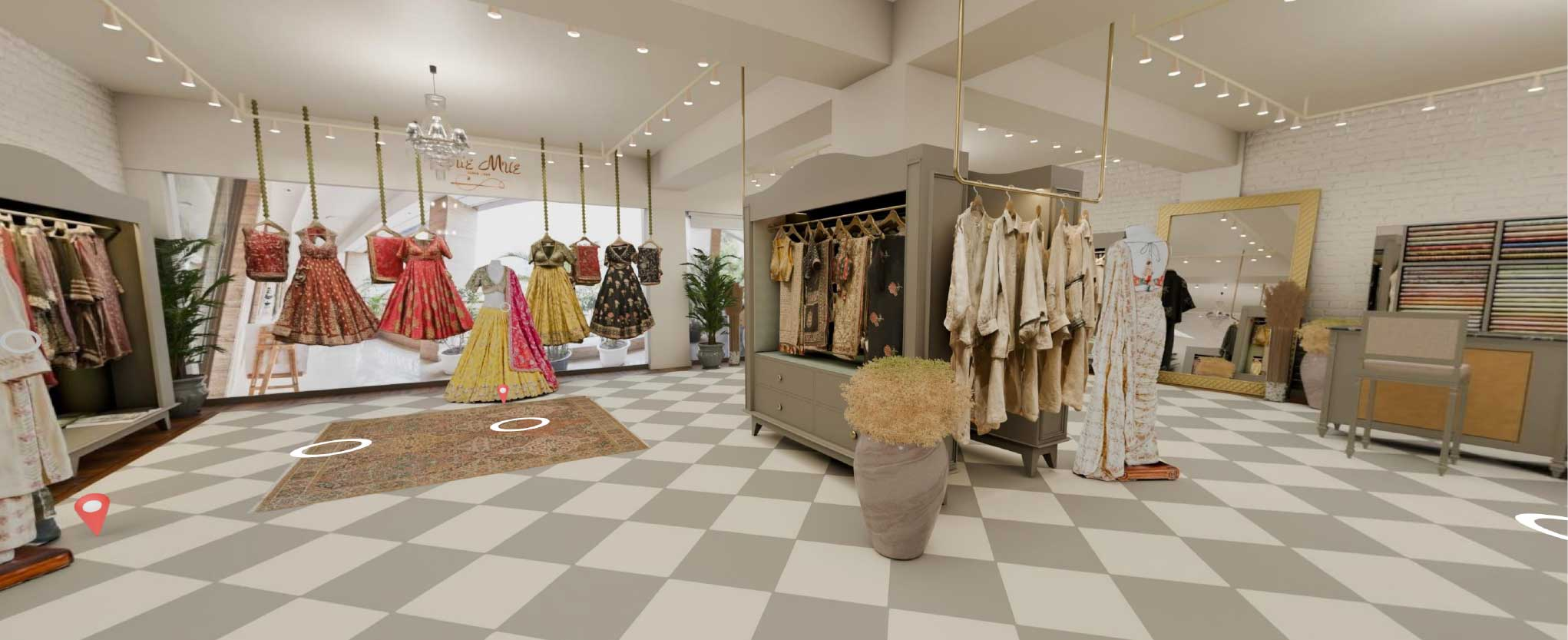
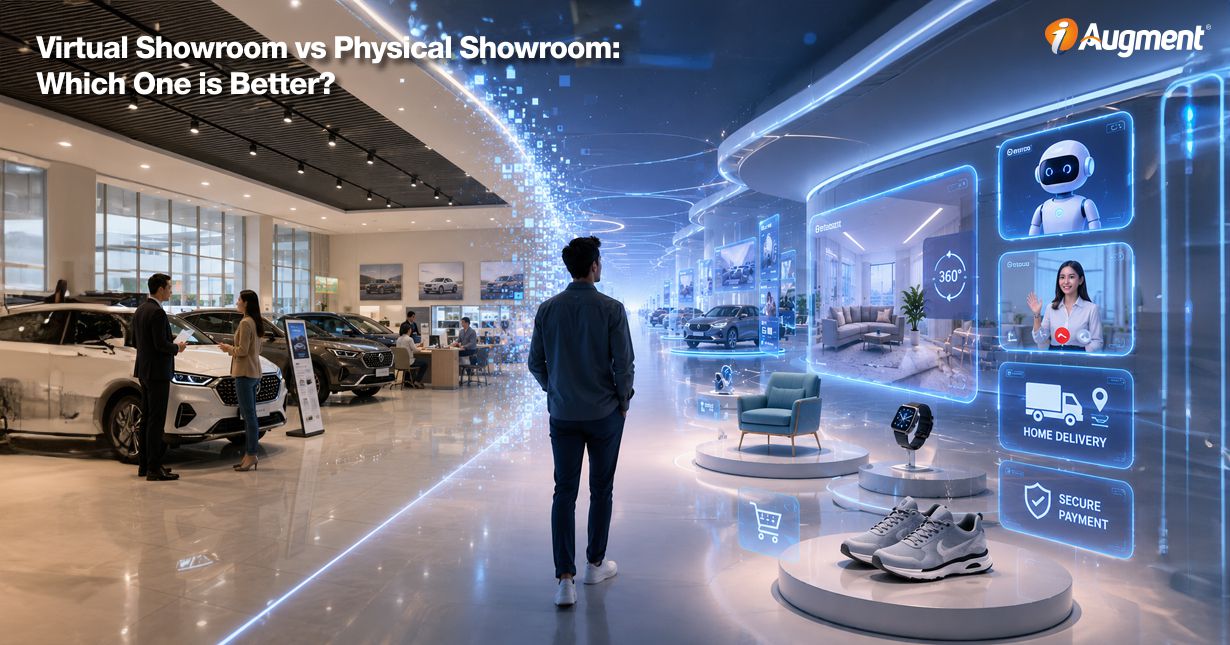
A virtual showroom is an interactive three-dimensional digital environment where customers can browse, explore, customize, and evaluate products through any internet-connected device. Instead of visiting a physical location, users navigate immersive spaces that replicate or improve the in-store experience.
Modern virtual environments combine realistic product visualization, intelligent navigation, and interactive experiences that allow enterprise brands to present thousands of products without physical inventory limitations.
Whether accessed through a browser or advanced spatial computing devices, they create a highly engaging buying journey that is available around the clock.
Build Your Virtual Showroom Today
Features of a Virtual Showroom
Enterprise-grade immersive platforms are built on sophisticated technologies designed for scalability and customer engagement.

1. WebVR Compatibility with Zero Download Requirements
One of the biggest advantages is accessibility. Users simply click on a link and enter a fully interactive environment without downloading large applications or installing specialized software.
This significantly reduces friction while increasing visitor participation across desktop and mobile devices.
Business Impact
- Faster customer onboarding
- Higher engagement rates
- Reduced abandonment
- Universal accessibility across global markets

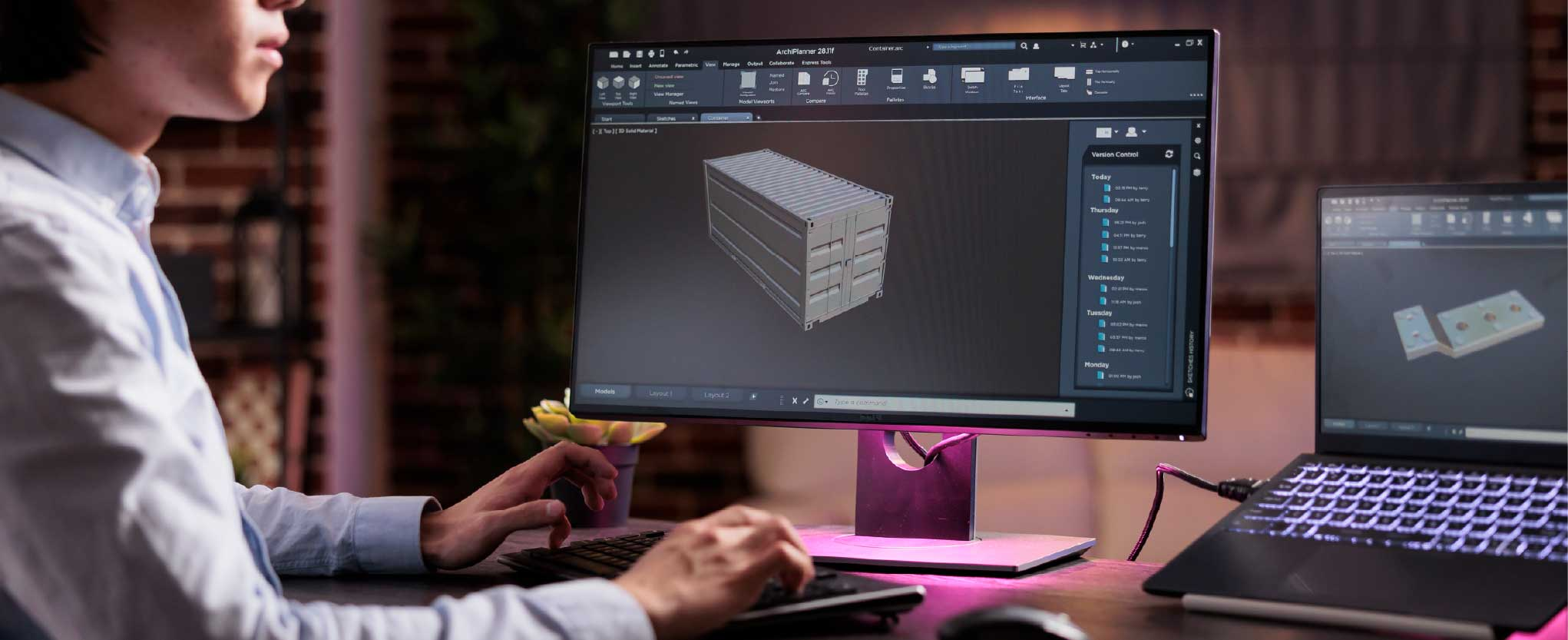
2. High-Fidelity 3D Product Modeling
Modern rendering technology creates products with remarkable realism.
Customers can:
- Rotate products from every angle
- Zoom into intricate details
- Inspect textures and finishes
- Compare multiple configurations
Luxury brands, automotive manufacturers, furniture companies, and industrial suppliers all benefit from photorealistic visualization that closely mirrors physical inspection.
Learn how virtual try-on reduces product returns for jewelry and watches.

3. Real-Time Product Configurators
Instead of viewing static product images, visitors actively participate in the buying process.
Interactive configurators allow customers to:
- Change colors
- Select materials
- Swap accessories
- Build custom product combinations
- Preview modifications instantly
The experience transforms passive browsing into active product discovery.

4. Live API Integration
Enterprise systems connect directly with the immersive environment.
This enables customers to view:
- Current inventory availability
- Dynamic pricing
- Regional product availability
- Promotional campaigns
- Product specifications
Because the information updates automatically, businesses avoid presenting outdated catalogs or unavailable products.

5. Cloud-Based Infinite Catalog Capacity
Unlike traditional retail spaces that must allocate expensive floor space, digital environments can display virtually unlimited product collections.
Large enterprise catalogs become organized experiences rather than overwhelming product lists.
Customers can effortlessly navigate:
- Product categories
- Seasonal collections
- Industry solutions
- Premium product lines
- Personalized recommendations without physical constraints.
Understand how iAugment deliver white glove services to browsers.
Business Benefits of a Virtual Showroom
For enterprise organizations, immersive commerce delivers measurable business value that extends far beyond visual appeal.
The benefits of virtual showroom technology begin with removing geographical limitations while creating a scalable sales environment that operates continuously.

1. Lower Capital Investment
Opening a flagship retail location often requires:
· Multi-year lease commitments
· Interior architecture
· Fixtures and displays
· Utility expenses
· Staffing costs
· Maintenance budgets
A digital immersive platform eliminates most of these recurring expenses while allowing brands to continuously expand their product portfolio.
Instead of investing millions into physical infrastructure, organizations can redirect capital toward innovation, marketing, and customer acquisition.

2. Unlimited Global Reach
A traditional showroom serves customers within driving distance. An immersive digital experience serves customers across continents simultaneously.
Whether your prospects are located in New York, London, Dubai, or Singapore, every visitor receives the same premium presentation without requiring additional real estate investments.
This dramatically expands market opportunities for enterprise brands pursuing international growth.
Discover how stacking increases the AOV for your jewelry brand.

3. Always Available
Business does not stop when stores close. Customers increasingly research products outside standard business hours, making continuous accessibility a competitive advantage.
Digital immersive environments operate:
- 24 hours a day
- Seven days a week
- Across multiple time zones
- Without scheduling appointments
Potential buyers can explore products whenever purchasing intent is highest.

4. Data-Driven Customer Intelligence
Traditional stores generate limited behavioral insights.
Digital environments capture valuable interaction data including:
- Product engagement duration
- Navigation paths
- Popular collections
- Customization preferences
- Frequently viewed products
- Drop-off points
These insights allow leadership teams to make smarter merchandising, marketing, and inventory decisions supported by measurable customer behavior instead of assumptions.

5. Faster Product Launches
Launching a new product inside a physical retail location often requires:
- Shipping inventory
- Updating displays
- Rearranging layouts
- Training staff
Digital environments simplify the process dramatically. New collections can appear instantly across global markets with updated visuals, interactive demonstrations, and product information available immediately.
This agility allows brands to respond quickly to changing customer preferences and competitive pressures.
Find out virtual try-on for watches: A complete guide for eCommerce

6. Enhanced Enterprise Scalability
Growth through physical expansion is expensive and time-consuming. Growth through immersive environments is significantly more flexible.
Enterprise organizations can introduce:
- New international markets
- Additional product categories
- Industry-specific experiences
- Regional branding
- Personalized customer journeys without constructing additional locations.
For organizations pursuing aggressive digital transformation strategies, this scalability becomes a major competitive advantage.

7. Improved Executive ROI
One of the strongest arguments for immersive commerce is financial efficiency.
When executives evaluate the cost comparison of virtual vs physical showrooms, they often discover that digital environments continue generating value long after deployment while avoiding recurring real estate obligations.
Instead of measuring success by store traffic alone, leadership gains access to engagement metrics, customer analytics, and conversion data that support continuous optimization.
This makes immersive platforms attractive investments for organizations focused on sustainable long-term growth.

8. Building Future-Ready Retail Experiences
Consumer expectations continue evolving toward interactive digital experiences.
Organizations investing in immersive 3D virtual retail spaces for enterprise position themselves ahead of competitors by combining advanced visualization with intelligent commerce capabilities.
Rather than replacing human relationships, these environments expand customer access while supporting sales teams with richer product presentations and better engagement opportunities.
As enterprise commerce continues shifting toward digital-first experiences, immersive environments provide a flexible foundation for future innovation.
Study how virtual showroom generate more quality leads.
Enterprise Applications of a Virtual Showroom
The modern enterprise no longer views immersive commerce as an experimental technology. It has become a strategic sales channel that reduces operational costs while expanding market reach.
The application of virtual showroom technology spans multiple industries where product visualization, customization, and global accessibility directly influence purchasing decisions.
Below are some of the most impactful enterprise use cases.
Ready to Go Beyond Physical Stores?

1. B2B Fashion and Wholesale Collections
Wholesale fashion brands traditionally invest heavily in seasonal trade shows and regional display centers to present new collections to buyers. While effective, these events involve significant logistics, travel expenses, and time commitments.
An immersive digital environment changes that model completely. Retail buyers can browse thousands of SKUs, inspect fabric textures through high-resolution 3D models, compare collections, and place bulk inquiries from anywhere in the world.
Business advantages
- Faster product launches
- Reduced travel costs
- Consistent global brand presentation
- Continuous buyer access
- Improved international sales opportunities
Instead of waiting for scheduled events, brands maintain a permanent digital destination where collections remain accessible throughout the year.
Know the top benefits of virtual showrooms for the furniture industry.

2. Automotive Configuration and Personalization
Modern vehicle purchases involve extensive customization.
Customers often want to explore:
- Exterior colors
- Wheel designs
- Interior finishes
- Performance packages
- Technology upgrades
Rather than displaying dozens of expensive physical variants, automotive companies can present every possible configuration inside an interactive digital environment.
Customers instantly visualize modifications while sales teams guide purchasing decisions with greater confidence. This creates an engaging experience while significantly reducing inventory display costs.

3. Heavy Industrial Equipment Demonstrations
Industrial machinery presents unique sales challenges. Products may weigh several tons, require specialized transportation, or exist only after custom manufacturing begins.
An immersive environment allows decision-makers to:
- Walk around machinery
- Explore internal components
- View operational animations
- Compare specifications
- Understand workflows without transporting equipment across countries or continents.
Engineering teams, procurement departments, and executives can collaborate remotely while evaluating complex investments.

4. Commercial Interior and Workplace Solutions
Office furniture manufacturers and commercial design firms increasingly rely on immersive environments to help clients visualize complete workspace layouts. Instead of reviewing static catalogs, customers can navigate through digital offices featuring:
- Conference rooms
- Executive suites
- Collaborative workspaces
- Reception areas
- Employee lounges
Products appear within realistic environments, helping buyers make confident purchasing decisions.
Understand how visual commerce as a conversion optimization strategy.

5. Consumer Electronics Launches
Technology brands frequently introduce products with numerous features that cannot be communicated through traditional images alone.
Interactive environments allow customers to:
- Rotate products in 360 degrees
- Explore internal components
- Watch feature demonstrations
- Compare product generations
- Interact with simulated interfaces
The result is a richer buying experience that increases customer engagement while reducing dependence on physical demonstration centers.

6. Luxury Retail Experiences
Luxury brands compete on storytelling as much as product quality.
Digital immersive environments recreate premium retail experiences through elegant architecture, cinematic lighting, and interactive storytelling that reflects brand identity.
Instead of limiting access to flagship locations, brands invite global audiences into premium digital destinations available from any connected device.
Pros and Cons
Every enterprise investment deserves objective evaluation. While immersive commerce offers significant advantages, executives should understand both strengths and limitations before making strategic decisions.
Find out how visual commerce for SMEs turn browser into buyers.
Pros
1. Global Accessibility
Customers, partners, and distributors can explore products from virtually any location without geographical restrictions.
2. Unlimited Product Capacity
Unlike traditional retail environments, digital spaces accommodate thousands of products without requiring additional square footage.
3. Lower Operating Costs
Organizations avoid recurring expenses associated with leases, utilities, maintenance, and physical display renovations.
4. Rapid Content Updates
New products, promotional campaigns, and seasonal collections can be published almost instantly.
5. Rich Customer Analytics
Every interaction provides measurable insights that help leadership optimize merchandising and marketing strategies.
6. Faster International Expansio
Brands enter new markets without investing in additional physical infrastructure.
Cons
1. Limited Physical Interaction
Customers cannot physically touch materials, evaluate textures, or experience product weight. Luxury goods and tactile products may still benefit from physical demonstrations.
2. Internet Dependency
High-quality immersive experiences rely on stable internet connectivity. Slower connections may reduce performance or visual quality.
Discover how to perform virtual showroom marketing help manufacturing in sales.
3. Initial Technology Investment
Although significantly lower than opening multiple retail locations, enterprise implementation still requires investment in:
- 3D asset creation
- Platform development
- System integrations
- Content management
4. Digital Adoption Curve
Some customer segments continue to prefer traditional shopping experiences and face-to-face interactions. Organizations may need hybrid strategies during digital transformation initiativ
What is a Physical Showroom?
A physical showroom is a dedicated retail or commercial space where customers interact directly with products before making purchasing decisions. It has long served as the primary environment for brand storytelling, customer engagement, and relationship building.
For decades, physical locations established credibility through architecture, merchandising, and personalized service. Customers could inspect products firsthand, speak with sales specialists, and make purchasing decisions based on direct sensory experiences.
Despite rapid digital transformation, physical spaces continue to play a significant role in industries where tactile evaluation and human interaction strongly influence buying behavior.
Features of a Physical Showroom
Lorem ipsum dolor sit amet, consectetur adipiscing elit. Ut elit tellus, luctus nec ullamcorper mattis, pulvinar dapibus leo.

1. Geographic Retail Presence
Every showroom occupies a specific location, making accessibility dependent on customer proximity. Prime retail districts often increase visibility and prestige but also introduce substantial lease commitments and operating expenses.
Location selection becomes a strategic investment with long-term financial implications.
Learn how digital showrooms are essential for B2B and B2C product demonstration.

2. Physical Product Display Areas
Unlike digital catalogs, physical environments present real inventory that customers can inspect closely.
Visitors can:
- Touch materials
- Compare finishes
- Evaluate craftsmanship
- Test functionality
- Experience product dimensions
This direct interaction creates confidence before purchasing.

3. Atmospheric Design
Architecture and interior design significantly influence customer perception.
Lighting, materials, music, scent, and spatial planning combine to create immersive environments that communicate luxury, innovation, or exclusivity.
Premium retail brands frequently invest heavily in showroom aesthetics because physical surroundings reinforce brand identity.

4. Face-to-Face Customer Service
One of the defining characteristics of traditional retail is personal interaction. Experienced sales professionals answer questions, demonstrate products, recommend alternatives, and build long-term customer relationships.
Complex purchasing decisions often benefit from these conversations, particularly in high-value industries.

5. Live Product Demonstration
Customers observe products operating in real-world scenarios rather than through digital simulations.
- Furniture can be tested.
- Appliances can be operated.
- Luxury materials can be examined.
- Vehicles can be inspected in person.
This tangible experience remains a powerful sales advantage.
Learn how to integrate iAugment virtual try-on to your eCommerce website.
Business Benefits of a Physical Showroom
Traditional retail continues to deliver value across numerous enterprise sectors. The benefits of physical showroom investments extend beyond product display by creating trust, credibility, and memorable customer experiences.

1. Immediate Sensory Evaluation
Physical interaction reduces uncertainty during purchasing decisions.
Customers gain confidence by:
- Touching materials
- Testing functionality
- Inspecting craftsmanship
- Experiencing product quality firsthand
This direct engagement often shortens the decision-making process for premium products.

2. Stronger Human Relationships
Many enterprise transactions rely on personal trust developed through face-to-face conversations. Sales consultants understand customer needs, answer complex questions, and guide purchasing decisions through personalized recommendations.
Relationship-driven industries continue to benefit from this human element.

3. Instant Cross-Selling Opportunities
Customers visiting a showroom frequently discover complementary products displayed nearby. Strategic merchandising encourages additional purchases by presenting coordinated collections and complete solutions rather than individual items.
This naturally increases the average order value.

4. Faster Trust Development
A professionally designed physical location signals long-term business commitment and market credibility. Customers often associate premium retail environments with product quality, reliability, and established brand reputation.
This perception can positively influence purchasing behavior.
Discover how virtual try-on strengthens customer purchase decisions.

5. Premium Brand Positioning
Flagship stores create memorable experiences that strengthen emotional connections with customers. Luxury architecture, exceptional service, and carefully designed environments reinforce exclusivity while differentiating brands from competitors.
For premium segments, these experiences remain highly valuable.

6. Supporting High-Value Consultative Sales
Many enterprise purchases involve lengthy discussions, demonstrations, and stakeholder collaboration.
Physical spaces provide dedicated environments where decision-makers can:
- Review product options
- Conduct detailed consultations
- Experience live demonstrations
- Finalize purchasing decisions
This remains particularly valuable for luxury, real estate, furniture, and specialized industrial sectors.
Enterprise Applications of a Physical Showroom
Despite the rapid growth of immersive commerce, traditional retail environments continue to play a significant role across industries where tactile interaction and personalized consultation influence purchasing decisions.
The application of physical showroom strategies remains highly valuable for businesses selling premium, customized, or experience-driven products.
1. Luxury Fashion and Accessories
High-end fashion brands rely on elegant retail environments to reinforce exclusivity and craftsmanship.
Customers often want to:
- Feel the quality of fabrics
- Compare finishes and materials
- Try products before purchase
- Receive styling advice from brand consultants
These experiences create emotional connections that strengthen brand loyalty and justify premium pricing.
Study how to increase sales via digital showroom.
2. Real Estate Sales and Property Visualization
Developers frequently build experience centers where prospective buyers can explore scale models, sample apartments, material libraries, and design concepts.
Physical showrooms allow customers to visualize:
- Interior layouts
- Construction quality
- Finish options
- Smart home features
- Community amenities
These spaces support high-value purchasing decisions that benefit from direct consultation and detailed presentations.
3. Premium Furniture and Interior Solutions
Furniture purchases involve aesthetics, comfort, dimensions, and functionality.
Customers prefer experiencing products firsthand by:
- Sitting on sofas
- Testing office chairs
- Opening cabinets
- Comparing upholstery
- Evaluating craftsmanship
Physical environments allow complete room settings that inspire customers while increasing cross-category purchases.
4. Home Improvement and Kitchen Design
Kitchen and bathroom manufacturers use showroom environments to demonstrate complete lifestyle solutions rather than individual products.
Visitors can interact with:
- Faucets
- Modular kitchens
- Smart appliances
- Countertop materials
- Storage solutions
The immersive physical setting helps customers visualize how products integrate into their homes.
Learn how to implement AI-guided selling in virtual showroom.
5. Enterprise Product Consultation Centers
Many B2B organizations maintain dedicated experience centers where enterprise buyers meet product specialists, engineers, and consultants.
These facilities support:
- Technical demonstrations
- Product training
- Executive presentations
- Client workshops
- Partnership discussions
The physical environment reinforces credibility while facilitating collaborative decision-making.
Pros and Cons
Every enterprise investment comes with advantages and limitations. Understanding these factors helps executives align showroom strategies with business objectives and long-term growth plans.
Pros
1. High Customer Confidence
Customers make purchasing decisions with greater certainty after physically interacting with products. This is particularly valuable for luxury goods, furniture, automobiles, and premium consumer products.
2. Strong Brand Presence
A flagship location becomes a visible representation of the company’s identity and market position. Architectural design, merchandising, and personalized service contribute to memorable customer experiences.
Learn how virtual showrooms create an immersive experience in real estate.
3. Personal Sales Relationships
Sales consultants can build trust, answer objections, demonstrate products, and recommend complementary solutions in real time. This human interaction remains a powerful driver for enterprise and luxury sales.
4. Immediate Product Demonstrations
Visitors can inspect products without relying on simulations or digital representations. Real-world demonstrations often accelerate purchasing decisions for high-value investments.
5. Local Market Authority
Well-designed showrooms establish credibility within regional markets while serving as venues for product launches, networking events, and customer engagement activities.
Cons
1. High Capital Investment
Traditional showrooms require significant spending on:
- Property acquisition or leases
- Interior construction
- Fixtures
- Utilities
- Security
- Maintenance
These recurring expenses directly impact profitability.
2. Limited Geographic Reach
Lorem ipsum dolor sit amet, consectetur adipiscing elit. Ut elit tellus, luctus nec ullamcorper mattis, pulvinar dapibus leo.
2. Limited Geographic Reach
Each location serves a relatively small customer radius. Expanding to additional markets requires new facilities and additional operational investments.
3. Fixed Inventory Capacity
Floor space limits the number of products that can be displayed.
Brands often showcase only selected collections, leaving much of their catalog unavailable for physical presentation.
Find out how iAugment virtual try-on brings jewelry to life.
4. Slower Expansion
Opening a new showroom involves site selection, permitting, construction, staffing, merchandising, and marketing. This process may take months or even years
5. Higher Operating Costs
Daily operations include staffing, cleaning, repairs, insurance, and facility management, creating ongoing expenses regardless of visitor volume.
Comparison Chart: Virtual Showroom vs Physical Showroom
Before comparing VR showroom investments with traditional retail environments, executives should evaluate which model delivers the strongest combination of scalability, customer engagement, operational efficiency, and long-term return on investment.
| Evaluation Criteria | Virtual Showroom | Physical Showroom |
|---|---|---|
| Capital Expenditure (CapEx) | Lower initial infrastructure investment with scalable digital assets. | High investment in real estate, construction, and interior design. |
| Operating Costs | Minimal facility-related expenses and cloud-based management. | Continuous spending on leases, utilities, maintenance, and staffing. |
| Geographical Footprint | Global accessibility from any connected device. | Restricted to specific physical locations. |
| Accessibility | Available 24/7 across multiple time zones. | Limited by operating hours and customer proximity. |
| Deployment Speed | Weeks to launch with digital asset development. | Months required for construction and setup. |
| Product Capacity | Virtually unlimited catalog presentation. | Limited by available floor space. |
| Customer Data Analytics | Detailed behavioral insights, engagement tracking, and interaction metrics. | Basic foot traffic and sales data with limited behavioral visibility. |
| Modification Flexibility | New collections and layouts updated instantly. | Physical redesign requires time, labor, and additional investment. |
| Scalability | Expansion into new markets without additional real estate. | Every new market requires another physical location. |
| Customer Interaction | Interactive 3D visualization and digital customization. | Direct sensory experience and face-to-face consultation. |
| Global Collaboration | Supports remote enterprise buyers and distributed teams. | Requires in-person visits. |
| Long-Term Growth Potential | Highly adaptable to evolving digital commerce strategies. | Growth tied directly to physical expansion and capital availability. |
Discover phygital solution in retail: From smart store to virtual showroom
Conclusion
The debate is no longer about replacing one model with another. It is about choosing the platform that best supports your growth ambitions.
Traditional showrooms continue to create exceptional in-person experiences and strengthen customer relationships, particularly for premium products that benefit from physical interaction. However, they also demand significant capital investment, geographic expansion costs, and ongoing operational commitments.
Virtual environments offer a different value proposition. They remove location barriers, provide unlimited catalog capacity, deliver actionable customer intelligence, and scale globally without the financial burden of additional real estate.
If your objective is sustainable expansion, international reach, and measurable digital engagement, investing in immersive spatial commerce positions your organization for the next generation of enterprise retail.
The brands that embrace digital experiences today are building the competitive advantages that will define tomorrow’s marketplace.