Introduction
Acquiring new customers has never been more expensive. Rising advertising costs, growing competition, and changing customer expectations mean that relying only on customer acquisition is no longer a sustainable growth strategy.
The businesses that outperform their competitors are those that focus on keeping existing customers engaged and coming back.
A virtual showroom transform your website from a simple sales channel into an interactive destination where customers can explore products, make confident decisions, and enjoy every visit.
Instead of focusing on a single purchase, you create meaningful relationships that increase customer lifetime value, repeat purchases, and long-term brand preference.
Learn the top benefits of virtual showrooms for the furniture industry.
Why Virtual Showrooms are Important for Business
Virtual showrooms have evolved far beyond being an attractive digital feature. Today, they play a direct role in improving customer engagement, strengthening purchase confidence, and creating experiences that motivate customers to return.
Many business leaders ask how do virtual showroom improve customer retention. The answer lies in creating an engaging shopping environment where customers spend more time interacting with products instead of simply browsing static pages.
This approach also supports improving e-commerce retention with VR because customers become more confident throughout their buying journey.

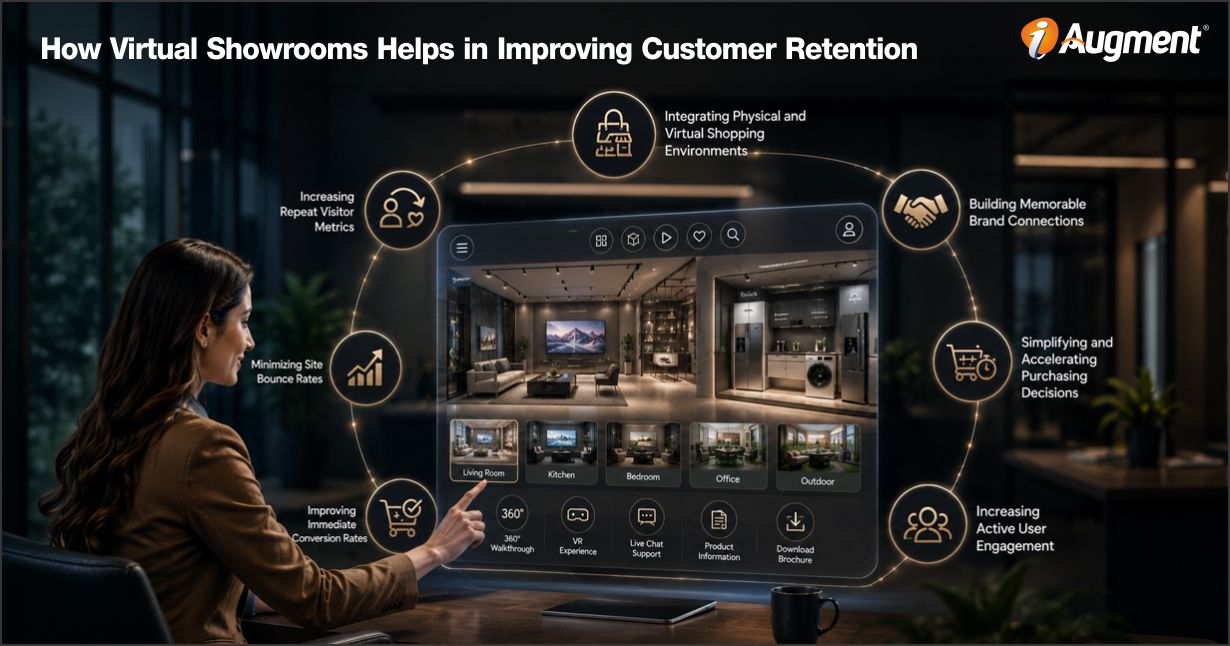
1. Integrating Physical and Virtual Shopping Environments
Today’s customers expect the convenience of online shopping without sacrificing the confidence they receive in a physical store.
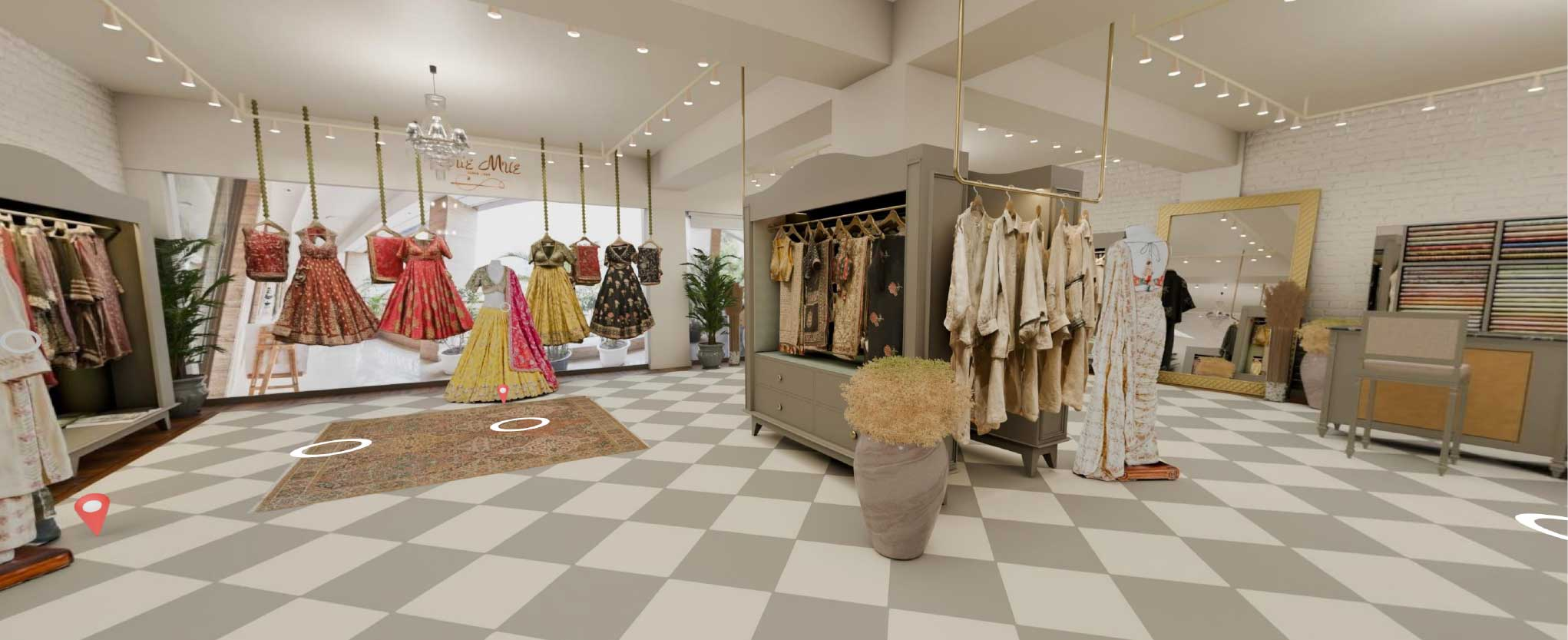
A virtual showroom experience combines both worlds by allowing customers to inspect products from multiple angles, explore collections, and experience products in an interactive environment. Buyers feel more informed before purchasing, reducing uncertainty and increasing purchase confidence.
For businesses, this creates stronger customer satisfaction while supporting higher repeat purchase rates.

2. Building Memorable Brand Connections
Most eCommerce websites look remarkably similar. Customers browse products, compare prices, and often leave within minutes.
Virtual showrooms create a different experience. Instead of scrolling through endless product grids, customers actively interact with products and explore branded environments.
These memorable experiences keep your brand top of mind long after customers leave your website. When they are ready to purchase again, they are far more likely to return to a brand they remember.
Understand how virtual showrooms generate more quality leads.

3. Simplifying and Accelerating Purchasing Decisions
Customers hesitate when they lack information.
Virtual showrooms solve this challenge by allowing shoppers to rotate products, zoom into details, compare variations, and understand product features more clearly.
Better product understanding leads to faster decisions and greater purchase confidence while reducing the number of questions your support and sales teams receive.

4. Increasing Active User Engagement
The longer visitors actively interact with your website, the stronger their connection with your brand becomes.
A rich digital experience encourages customers to explore product categories, discover new collections, and spend more time learning about your products. Active participation naturally creates greater interest than passive browsing.
Customers who invest more time exploring your products are much more likely to return in the future.

5. Improving Immediate Conversion Rates
People buy when they feel confident about their decision. Virtual showrooms help build confidence by presenting products in a realistic and interactive environment.
Customers spend more time understanding product features, comparing options, and visualizing how products fit their needs. This reduces purchase hesitation and increases the likelihood of completing a transaction during the same visit.

6. Minimizing Site Bounce Rates
First impressions matter. If visitors cannot quickly connect with your website, they often leave within seconds. A virtual showroom captures attention immediately through interactive product displays and immersive navigation.
Instead of passively browsing, customers become active participants in the shopping process, encouraging them to stay longer and explore more pages across your website.
Discover how visual commerce act as a conversion optimization strategy.

7. Increasing Repeat Visitor Metrics
Traditional online stores rarely change shopping experiences. Once customers have viewed the products, there is little reason to come back unless they need to make another purchase.
Virtual showrooms create a more dynamic environment. New collections, seasonal displays, product launches, and interactive features give customers fresh resources to return regularly. Every visit is different, helping your website become a destination rather than just another online store.
Why Immersive Assets Are Important for Your Customers
Customers retention begins with customer satisfaction. When shopping is easy, informative, and enjoyable, buyers naturally return. Virtual showrooms provide several advantages that make customers feel more confident throughout their journey.

1. Prompting Natural Word-of-Mouth Referrals
People enjoy sharing unique experiences. An interactive virtual showroom stands out from conventional eCommerce websites, making customers more likely to recommend your store to friends, family, and colleagues.
Whether they share a product link or recommend your website through social media, these referrals help expand your reach while building trust through personal recommendations.

2. Encouraging Consistent Repeat Purchases
Customers are more likely to buy again when they already understand how your website works. Familiar navigation, interactive product exploration, and a comfortable buying process reduce the effort required for future purchases.
This familiarity helps increase customer retention because returning shoppers know exactly where to find products and feel confident throughout the purchasing journey.
Find out how virtual showroom marketing helps manufactures in sales.

3. Providing a Distinct Purchasing Advantage
Every customer wants to make the right decision to buy. Virtual showrooms give them greater control by allowing them to inspect products closely, compare variations, and evaluate options before making a purchase.
This added confidence saves time, reduces uncertainty, and creates a shopping experience that feels more informative than traditional product pages. When customers consistently make satisfying purchases, they are much more likely to return to your business.

4. Maximizing Shopper Convenience
Customers are more likely to buy again when they already understand how your website works. Familiar navigation, interactive product exploration, and a comfortable buying process reduce the effort required for future purchases.
This familiarity helps increase customer retention because returning shoppers know exactly where to find products and feel confident throughout the purchasing journey.

5. Delivering a Highly Personalized Experience
No two customers shop the same way. Virtual showrooms can display relevant products based on browsing history, preferences, and previous purchases.
This level of personalization makes every visit feel more relevant and strengthens customer loyalty over time. When customers consistently find products that match their interests, they are far more likely to continue shopping with your brand.
Study why digital showrooms are essential for B2B and B2C product demonstration.
Conclusion
Customer retention is no longer driven by price alone. It depends on the quality of every interaction customers have with your brand. A virtual showroom creates an engaging environment where visitors can explore products, make informed decisions, and enjoy a more interactive shopping journey.
If you want to improve customer lifetime value, encourage repeat purchases, and build lasting brand relationships, investing in immersive commerce is a smart business decision. Companies that adopt virtual showrooms today will be better positioned to retain customers and stay ahead in an increasingly competitive digital marketplace.