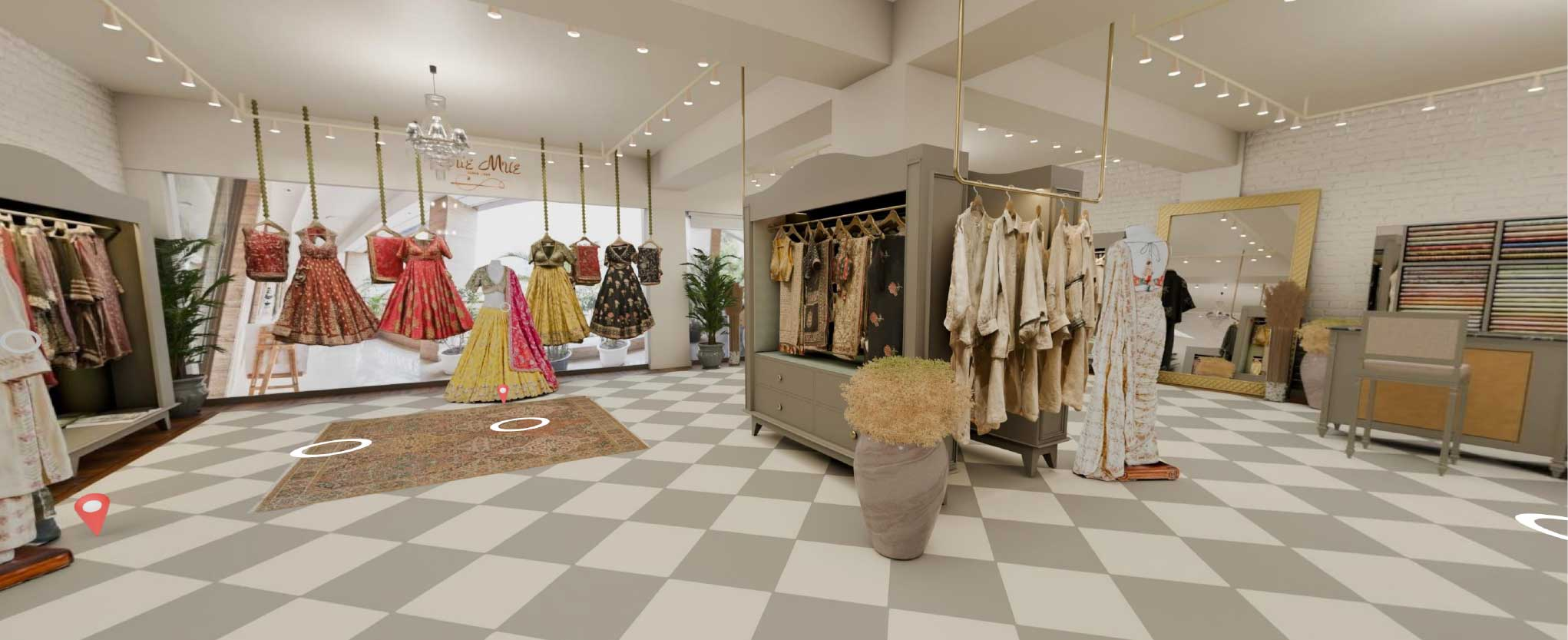
The digital commerce space is transforming, and AI-guided selling is transforming how online retailers approach customer engagement inside virtual showrooms. In an era where shoppers expect a personalized experience and instant product recommendations, many businesses still struggle to connect digital visitors with the right products effectively.
This challenge is especially critical for industries like furniture retail, where buying decisions depend on visualization, size, and lifestyle fit. That’s where AI-guided selling steps to bridge the gap between human-like guidance and intelligent automation.
While integrating guided selling technology within a virtual showroom, your brands can deliver smart recommendations, reduce decision fatigue, and accelerate conversions.
In this blog, we will discuss why virtual showrooms are becoming essential for retailers, how to audit your product data, the process of implementing AI-guided selling, the right tools and platforms to consider, and the measurable impact this technology has on business performance.

Why Virtual Showrooms are Growing in Importance
Over the years, virtual showrooms have evolved from a futuristic idea into a practical business tool. It allows customers to visualize and experience products in 3D, interact with variations, and visualize them in real-world contexts. Let’s understand the key reasons behind their growing importance.

1. Changing Consumer Behavior
Modern shoppers prefer immersive, self-service experiences. According to Statista, over 70% of consumers now research products online before making high-value purchases like furniture. Virtual showrooms give them the ability to interact with products virtually, like rotating, zooming, and testing customization options.
When paired with AI-guided selling, customers receive intelligent suggestions based on their preferences and browsing patterns.
Learn the importance of phygital solutions in retail: From smart stores to virtual showrooms.
2. Competitive Differentiation
In saturated markets, standing out requires more than just quality products. Retailers using guided selling solutions in virtual showrooms can create an engaging, interactive buying journey.
For example, an AI-powered assistant can suggest the ideal sofa style based on room dimensions, color preferences, and budget, giving a personalized touch that competitors without guided selling tools can’t match.


3. Efficiency and Scalability
Unlike physical showrooms, virtual ones operate 24/7 without location constraints. AI-guided selling automates product recommendations and information delivery, freeing up human agents for more complex tasks.
Retailers can scale their operations faster, serving thousands of visitors simultaneously while maintaining a high level of personalization.
4. Improved Engagement
Virtual showrooms with guided selling technology make browsing interactive and enjoyable. AI-driven assistants can engage visitors in conversational product discovery, making the experience feel more human.
Studies show that interactive experiences can increase session duration by 2.5x compared to traditional product pages.
Understand top phygital trends that are reforming retail and eCommerce.


5. Data-Driven Insights
Every interaction within a virtual showroom generates valuable behavioral data. Guided selling platforms analyze this data to understand trends such as which products attract the most attention, which styles convert better, or where customers drop off in their journey. These insights help refine both product offerings and marketing strategies.
How to Audit Product Data to Prepare for AI-Guided Selling
Before implementing AI-guided selling, your product data must be structured, accurate, and consistent. AI relies on clean, well-organized data to make intelligent recommendations.
Start by auditing all existing product information like titles, descriptions, attributes, images, and tags. Identify gaps or inconsistencies that might confuse AI algorithms. For instance, if your furniture items don’t have standardized size or color metadata, the AI system may struggle to match them with customer needs.
Next, categorize products based on buying intent and attributes. For example, “living room sofas” might include subcategories like sectional, recliner, or loveseat. Tag each with attributes like material, size, price, and color options.
Finally, enrich your product data with customer-centric terms like what users actually search for. This process improves how guided selling tools interpret queries and deliver relevant suggestions.
Define Use Cases and Roles
The success of AI-guided selling in a virtual showroom depends on defining clear use cases. Start by identifying the specific goals: Are you trying to reduce decision time, increase average order value, or improve product discovery?
Common use cases for AI-guided selling include:
- Product Recommendation Engine:Suggesting furniture sets that complement each other.
- Virtual Assistant for Discovery:Asking customers questions like “What’s your room size?” or “What’s your style preference?” to filter results.
- Personalized Styling:Offering design suggestions based on customer taste and lifestyle.
- Upselling and Cross-selling:Recommending accessories or complementary items.
Defining roles is equally important. Assign responsibilities across teams:
- The marketing team manages AI insights for campaigns.
- The sales team uses guided selling tools to convert leads.
- The data team maintains product information accuracy.
With a clear role, you can define use cases; the AI system aligns with business objectives instead of functioning as a standalone feature.
Select Guided Selling Tools and Set Requirements
Choosing the right guided selling tools is a key step. You need solutions that can integrate smoothly with your virtual showroom platform while supporting real-time recommendations.
Find out why your furniture business needs a virtual showroom.
Look for these core features:
- AI-driven product matching:The system should analyze user intent, context, and preferences.
- Integration Capability:Compatibility with your 3D configurator, CRm, and eCommerce backend.
- Visual product guidance:Tools that display interactive visual options instead of text-only recommendations.
- Analytics Dashboard:A guided selling platform must provide insights related to customer behavior and performance metrics.
While setting requirements, focus on scalability and customization. The chosen guided selling solution should support multiple product lines and adapt to customer segments easily.
For example, integrating guided selling tools with a 3D product configurator can allow furniture buyers to visualize their designs while receiving AI suggestions in real-time. This combination improves both engagement and confidence in buying decisions.
Test Implementation
Before full-scale deployment, start with a pilot program. Select a limited product category, such as dining furniture or living room sets, and integrate AI-guided selling features within that section.
Study the application of online showrooms in the digital world.
During the pilot phases:
- Test AI accuracy in understanding customer preferences.
- Evaluate how product recommendations influence conversions.
- Collect user feedback to identify improvement areas.
The pilot helps you measure effectiveness without disrupting your main sales process. It also allows fine-tuning of AI algorithms and training models for better accuracy.
For instance, if customers frequently reject recommendations, it may indicate gaps in product data or misaligned AI logic. Adjusting those parameters early can prevent large-scale issues later.
Train Teams and Build Adoption of Guided Selling Tech
Even the most advanced guided selling platform fails without user adoption. Your team needs to understand how to leverage technology effectively.
Begin by conducting training sessions for sales and customer experience teams. Demonstrate how AI-guided selling works, what insights it offers, and how to interpret them. Encourage teams to use data dashboards for tracking performance and identifying opportunities.
Additionally, create a culture of collaboration between AI systems and human expertise. The goal is not to replace human judgment but to augment it. Sales associates can focus on relationship-building while AI handles repetitive recommendation tasks.
Consistent internal communication and leadership support will help build trust in the technology to ensure smoother adoption across departments.
Understand the top benefits of a virtual showroom solution.
Monitor, Optimize, and Scale
Once AI-guided selling is live, continuous monitoring is critical. Analyze engagement metrics, recommendation accuracy, and conversion rates regularly.
Pay attention to customer feedback, like did they found recommendations helpful? Did the experience feel natural? These insights help refine both AI algorithms and user experience.
Optimization involves updating product data, retraining AI models, and fine-tuning filters based on performance insights. For instance, if certain questions in your guided selling flow cause drop-offs, simplify or rephrase them.
Once optimized, scale the guided selling solution across your entire product catalog. Introduce new AI-driven features such as predictive personalization and anticipating customer needs before they express them.
Impact of AI-Guided Selling
AI-guided selling is more than technology; it’s a growth engine for retail. Let’s look at its measurable impact.
- Conversion Rate Boost:According to McKinsey, AI-powered product recommendations can increase conversion rates by up to 35%.
- Higher Average Order Value:Personalized guidance encourages customers to explore premium items, increasing average order value by around 20%.
- Reduced Bounce Rate:Interactive experiences like virtual showrooms combined with guided selling tools can lower bounce rates by 30%.
- Faster Decision-Making:Customers spend less time comparing products, leading to quicker checkout processes.
- Customer Loyalty:Personalized, relevant interactions increase repeat visits and brand trust.
A guided selling solution integrated into a virtual showroom transforms static browsing into dynamic engagement. Retailers gain visibility into what drives purchase decisions and continuously refine the experience based on real-world data.
Understand the cost of a virtual store tour.
Conclusion
AI-guided selling in virtual showrooms is redefining how furniture retailers connect with customers. It merges intelligence with interactivity, giving shoppers a personalized journey from discovery to purchase.
By auditing your product data, selecting the right guided selling tools, and building internal adoption, you can create a powerful system that understands customer intent and delivers exactly what they want.
For retailers, this approach is a significant change. It doesn’t just improve sales; it elevates the entire shopping experience, helping brands stay ahead in an increasingly digital marketplace.
Frequently Asked Questions
Q. Which AI tool is best for sales?
Ans. The best AI tool for sales depends on your business needs, but some top-performing options include Salesforce Einstein, HubSpot Sales Hub, and Drift. These platforms use AI to analyze customer data, predict buying intent, and automate follow-ups.
Salesforce Einstein, for example, provides predictive insights and lead scoring, while HubSpot helps personalize outreach using behavioral analytics. Drift uses conversational AI to engage prospects in real time.
Together, these tools improve lead management, conversion rates, and customer experience, making sales teams more efficient and data-driven.
Q. What is AI selling?
Ans. AI selling refers to the use of artificial intelligence to support and automate various parts of the sales process. It helps sales teams understand customer preferences, predict buying patterns, and personalize recommendations.
AI can analyze past interactions, identify high-value leads, and even automate repetitive tasks like email follow-ups or meeting scheduling. The goal of AI selling is to make sales strategies more precise, efficient, and customer-focused.
Q. What is AI-guided selling?
Ans. AI-guided selling combines data analytics, machine learning, and automation to guide customers through the buying journey with personalized product recommendations and support. In a virtual showroom, AI acts as a smart assistant, asking relevant questions, understanding intent, and suggesting the best-fit products.
For sales teams, it offers data-driven insights on what customers are likely to purchase and when. This approach reduces decision fatigue, improves conversions, and delivers a more engaging shopping experience.
Essentially, AI-guided selling helps both the buyer and seller make more informed, confident, and efficient purchasing decisions.