Introduction
Luxury shoppers expect confidence before they buy. They want to know how a diamond ring complements their hand. They want to see whether a premium watch matches their wrist size. And they want answers without visiting a physical store.
That shift has changed how luxury brands approach online shopping. Interactive product visualization has become a valuable sales tool, helping customers make informed decisions while reducing hesitation.
Instead of relying on static product photos, you can now give shoppers the ability to preview products before they complete a purchase.
The next question is simple. Which technology should you choose? Understanding the mechanics behind artificial intelligence and augmented reality can help you invest in the right solution for your business.
This guide explains how each approach works, where it excels, and what it means for your digital retail strategy.
Understand the virtual showroom implementation challenges.
What is an AI Virtual Try-On?
Imagine you’re browsing an online luxury jewelry collection and discover a necklace that immediately catches your attention. Instead of wondering how it might look on a model that doesn’t reflect your target audience, you instantly see the same piece displayed on a photorealistic digital model that matches your preferred styling, complexion, and fashion aesthetic.
That is the strength of an AI virtual try-on platform.
Unlike traditional visualization methods that depend on expensive photoshoots or manually created lifestyle images, modern AI-powered platforms generate studio-quality visuals using existing product photography.
The result is a polished product presentation without organizing model bookings, photographers, makeup artists, or studio production.
Solutions such as iAugment take this concept even further. They transform standard 2D product images into premium lifestyle visuals with intelligent personalization.
Instead of simply placing an accessory onto a generic model, the platform generates realistic marketing assets that align with your chosen demographic, fashion style, background, and skin tone.
For luxury brands, this means launching visually rich campaigns faster while maintaining consistent brand aesthetics across thousands of SKUs.
Help Your Customers Buy with Confidence
How Does AI Virtual Try-On Work?
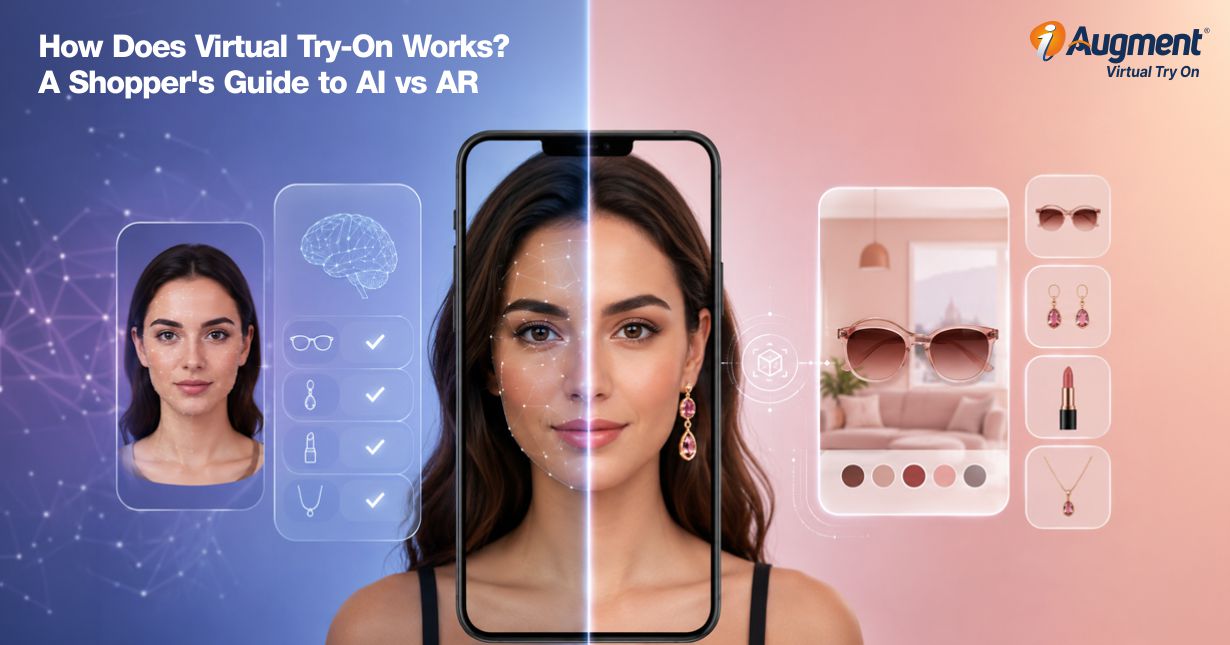
If you’ve ever wondered how does virtual try-on works? The final output appears simple, several advanced AI models work together behind the scenes to create a photorealistic result.

Step 1: Image Upload
Everything begins with a customer uploading a clear photograph. Most platforms recommend a front-facing image captured in good lighting, although many modern systems can also process casual smartphone photos.
The uploaded image becomes the foundation for the entire display process.

Step 2: Body and Feature Recognition
Next, computer vision algorithms identify the important parts of the image.
The system locates facial landmarks, wrists, fingers, ears, necklines, or other body regions depending on the product category. It separates the shopper from the background and creates a detailed understanding of where the product should appear.
This process is known as body segmentation.

Step 3: Image Synthesis
Once the shopper’s image has been analyzed, AI creates a complete version of the photograph.
It intelligently blends the selected accessory into the scene while preserving realistic lighting, reflections, skin texture, shadows, and natural positioning. The result looks authentic because the model generates pixels instead of simply overlaying an image on top of another.
Learn why virtual try-on is no longer a feature but an eCommerce expectation.
Strategic Benefits of AI Virtual Try-On
The appeal of AI-powered visualization extends beyond visual quality. It also gives brands a practical way to introduce interactive shopping without rebuilding their entire digital product catalog.

1. Faster Time to Market
Launching a new collection traditionally involves weeks of creative production. Traditional lifestyle photography often requires weeks of planning. AI virtual try-on helps it reduce it to several days (a month or 2 for large catalogs).
Products must be photographed, models scheduled, images edited, and campaigns approved before anything reaches the website.
AI shortens this process by generating lifestyle imagery from existing product photos, allowing brands to publish campaigns much faster.

2. Absolute Photorealism in Product Presentation
Luxury purchases depend heavily on visual confidence. Customers closely examine gemstone brilliance, polished metal finishes, leather textures, and intricate craftsmanship before making a buying decision.
AI virtual try-on excels because they recreate realistic visual details rather than placing simple graphic overlays on an image.
Sophisticated algorithms simulate:
- Natural lighting
- Realistic shadows
- Skin blending
- Metallic reflections
- Fabric folds
- Perspective adjustments
- Surface textures
The final image feels believable, helping shoppers trust what they see. For premium jewelry and fashion brands, that added realism can significantly improve customer confidence before checkout.

3. Reduced Dependence on Physical Photoshoots
Professional fashion photography requires substantial investment. Studios, photographers, lighting equipment, stylists, models, and post-production teams all contribute to production costs.
AI replaces much of that workflow by generating photorealistic marketing assets digitally, helping brands create premium visuals without repeating the same production cycle for every collection.
Discover how virtual try-on reduces product return.
Operational Pros and Cons
Like any retail technology, AI-powered visualization comes with trade-offs. Understanding both sides helps you determine whether it aligns with your product catalog, customer expectations, and digital roadmap.
Advantages
- Lower implementation costs:You can build engaging product previews using existing high-quality product photography instead of investing in a complete library of 3D assets.
- Fast deployment:Brands with established image catalogs can introduce interactive shopping much sooner than those building detailed digital models from scratch.
- Highly realistic visuals:AI produce images that capture lighting, reflections, textures, and subtle details that shoppers expect from luxury products.
- Easy for shoppers to use:Customers simply upload a photo. There is no need to download an app or learn a new interface.
- Supports catalog expansion:Adding new products is often as simple as photographing them in your studio, making it a practical option for brands with frequently changing collections.
Limitations
- No live interaction:Customers receive a try-on image instead of seeing the product move with them in real time.
- Limited viewing angles:The output is based on the uploaded image, so shoppers cannot freely rotate their wrist, hand, or face to inspect the product from different perspectives.
- Dependent on image quality:Poor lighting, blurry photos, or partially hidden body features can reduce the quality of the final result.
The takeaway is simple. AI excels at helping shoppers imagine how a product complements their appearance. It is less effective when accurate scale and movement become the deciding factors.

1. Ready-to-Wear Fashion
Fashion brands often launch hundreds or even thousands of new products every season.
Creating detailed 3D assets for every shirt, jacket, dress, or handbag can become expensive and time-consuming. AI-powered visualization allows brands to work from professional product photography while still giving customers realistic previews.
For apparel retailers, this provides a practical balance between visual quality and operational efficiency.

2. Lifestyle and Fashion Accessories
Products such as handbags, belts, footwear, and sunglasses also benefit from AI-powered visualization, especially when the primary objective is style inspiration rather than exact physical measurement.
Study why 3D models are the future of retail brands.

3. Luxury Jewelry
Jewelry brands often introduce new collections throughout the year, from engagement rings and necklaces to bracelets and earrings. Photographing every product on multiple models, across different backgrounds and styling themes, can become both time-consuming and expensive.
An AI-powered solution allows you to generate high-quality lifestyle images from existing product photos. The same necklace or bracelet can be showcased on different models with varying skin tones, hairstyles, and fashion aesthetics, helping you create localized campaigns without organizing additional photoshoots.

4. Luxury Watches
Luxury watch retailers also benefit from AI-generated visualization, particularly when the goal is to create premium marketing content rather than demonstrate live wrist tracking.
Instead of producing separate campaigns for men’s, women’s, or regional collections, AI can generate consistent, high-quality imagery while preserving the watch’s design details and premium finish.
This makes it easier to launch new collections quickly and maintain a cohesive visual identity across your eCommerce store and marketing channels.
What Is AR Virtual Try-On?
Now imagine a different shopping experience. Instead of clicking a photograph, you open your smartphone camera.
Within seconds, a luxury watch appears on your wrist. Raise your arm, and it follows naturally. Walk into brighter lighting, and the digital object adapts to the changing environment.
That is an AR virtual try-on.
Unlike generative AI, augmented reality places digital products into your live camera view. Advanced computer vision algorithms continuously analyze body movements and update the product’s position in real time.
The result feels interactive rather than static.
For shoppers, this creates a far more immersive virtual try-on experience. They can move naturally, inspect products from multiple angles, and gain greater confidence before purchasing.
This level of interaction is particularly valuable for luxury watches and fine jewelry, where proportions, placement, and visual balance strongly influence buying decisions.
Learn everything about virtual try-on for watches.
Strategic Benefits of AR Virtual Try-On
For luxury brands, augmented reality delivers much more than visual appeal. It turns online shopping into an interactive product demonstration that closely mirrors the confidence customers gain during an in-store visit.

1. High-Intent Experiential Play
Luxury shoppers rarely make impulse purchases. They compare products, examine craftsmanship, and spend time deciding whether a piece matches their personal style.
AR supports this decision-making process by allowing shoppers to interact with products instead of simply viewing them.
Customers can:
- Turn their wrist naturally.
- Compare multiple watch designs.
- Switch between ring styles.
- View products from different angles.
- Experiment with different finishes before making a selection.
The longer shoppers engage with products, the more invested they become in the purchase journey. This deeper engagement often translates into higher add-to-cart activity and stronger purchase intent.

2. Unmatched Scale and Proportion Validation
One of the biggest challenges in luxury retail is helping customers judge size accurately. A 42 mm watch may look perfect on one wrist but oversized on another. A cocktail ring may appear elegant on one hand and overwhelming on another.
Modern spatial tracking addresses this challenge by calculating body geometry and positioning digital objects with remarkable accuracy.
When shoppers try-on jewelry virtually, they gain a much clearer understanding of scale, proportion, and overall appearance before committing to a purchase.
For premium products where appearance depends heavily on precise fit, this added confidence can make a significant difference in purchasing decisions.
Operational Pros and Cons
Augmented reality has become the benchmark for premium digital shopping experiences. However, it requires a greater investment in digital assets and technical infrastructure than AI-generated visualization.
The question is whether that investment aligns with your business objectives.
Advantages
- Live product interaction:Shoppers can move naturally while the virtual product follows their body in real time.
- Accurate size visualization:Advanced spatial tracking provides a realistic representation of how products fit different body proportions.
- Higher customer confidence:Seeing products from multiple angles reduces uncertainty before checkout.
- Greater shopper engagement:Interactive experiences often keep visitors on product pages longer, giving them more opportunities to compare products and make informed decisions.
- Excellent for premium retail:Luxury watches, rings, bracelets, and eyewear benefit from precise positioning that highlights craftsmanship and proportions.
Understand how stacking helps increase the average order value for jewelry.
Limitations
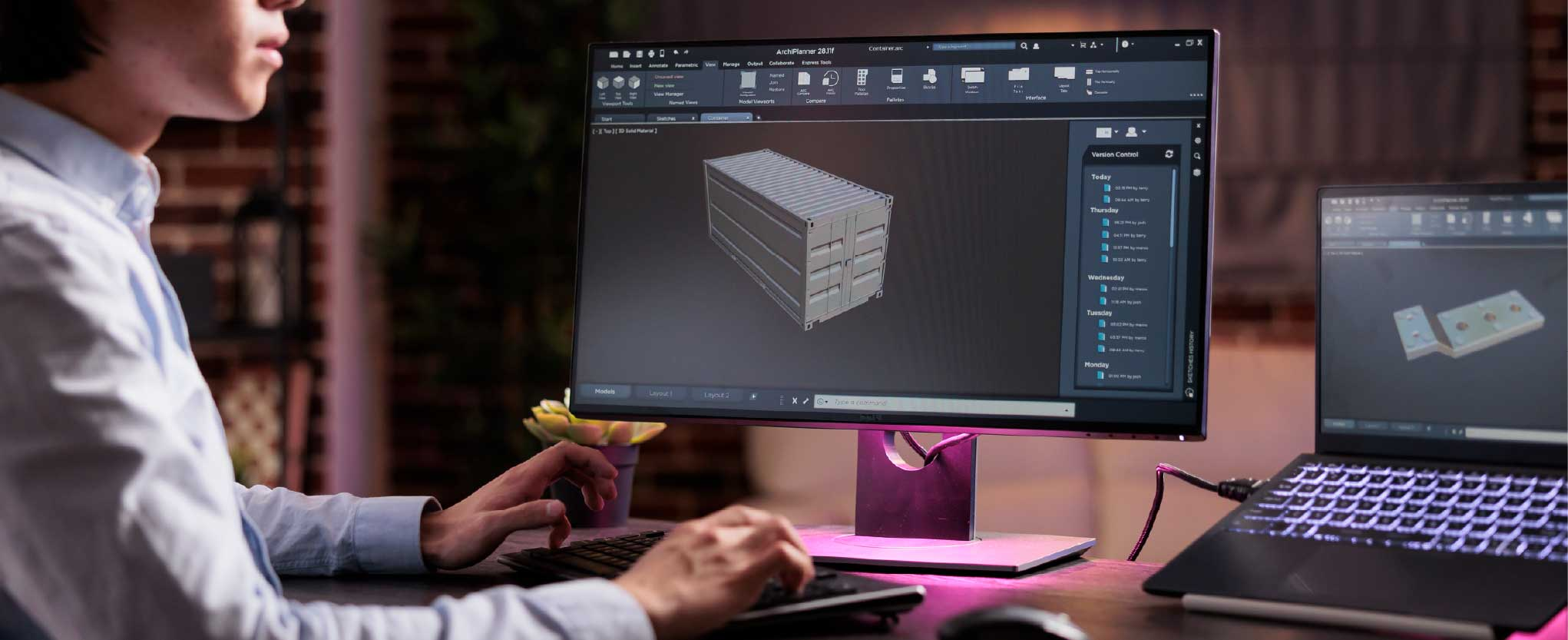
- Requires 3D product assets:Every product typically needs a clean, optimized 3D model before it can be displayed in augmented reality.
- Higher production investment:Creating and maintaining a large catalog of 3D assets requires additional time, expertise, and budget.
- More technical implementation:Camera tracking, rendering optimization, and device compatibility require careful planning.
- Ongoing asset management:Every new product launch introduces additional digital content that must be created and maintained.
Although the initial investment is greater, many luxury retailers view AR as a long-term digital asset rather than a one-time project. Once high-quality 3D models are available, they can support multiple customer experiences across websites, mobile applications, social commerce, and in-store digital displays.
Ideal Target Verticals for AR Virtual Try-On
If your products depend on accurate sizing, realistic proportions, and customer confidence, augmented reality is difficult to beat.
This is where shoppers often ask, how does virtual jewelry try on work before trusting the technology. The answer lies in advanced computer vision that continuously maps body movements and positions digital products with remarkable precision.
Several industries have become clear leaders in AR adoption.

1. Fine Jewelry
Jewelry purchases are highly emotional.
Customers want to see how an engagement ring catches the light, whether a tennis bracelet complements their skin tone, or how a pendant sits around the neckline.
Real-time visualization builds confidence because shoppers can observe products while naturally moving their hands, wrists, or upper body.
This level of interaction makes online luxury shopping feel significantly more personal.

2. Premium Eyewear
Eyewear is another category where millimeter-level positioning matters.
Small differences in frame width, bridge fit, and lens proportions can completely change how a pair of glasses looks on a customer.
AR tracking allows shoppers to compare different styles instantly while viewing themselves from multiple angles.
Learn how virtual try-on strengthens customer purchase decision.

3. High-End Accessories
Bracelets, bangles, necklaces, earrings, and similar accessories also benefit from accurate spatial placement. Customers gain a realistic understanding of scale and positioning, making purchasing decisions easier without visiting a physical showroom.
For brands competing in premium retail, AR has evolved from a marketing feature into a revenue-driving sales capability.
Turn Product Browsing into Purchase Confidence
Comparison Chart: AI Virtual Try-On vs AR Virtual Try-On
Choosing between AI and AR is not about deciding which technology is better.
It is about selecting the technology that aligns with your catalog, digital assets, customer expectations, and business objectives.
The comparison below highlights the differences that matter most to executive decision-makers.
AI Virtual Try-On vs. AR Virtual Try-On
| Evaluation Criteria | AI Virtual Try-On | AR Virtual Try-On |
|---|---|---|
| Input Source Requirement | Customer clicks a static smartphone photo | Customer uses a live smartphone camera |
| Core Processing Target | AI helps visualize the product image on the user | Real-time spatial tracking continuously positions digital products |
| Digital Asset Requirement | Professional 2D product photography | Optimized 3D CAD or 3D product models |
| Implementation Complexity | Moderate | Higher |
| Asset Creation Overhead | Lower because existing photography can often be used | Higher because every product requires standardized 3D assets |
| Customer Interaction | Static preview | Fully interactive live visualization |
| Scale Precision | Approximate visual estimation | High spatial accuracy with body tracking |
| Best Product Categories | Fashion apparel, footwear, lifestyle accessories | Luxury watches, jewelry, eyewear, premium accessories |
| Checkout Conversion Potential | Improves purchase confidence | Often delivers stronger conversion gains through real-time interaction |
| Long-Term Digital Asset Value | Primarily supports image generation | Supports websites, mobile apps, social commerce, virtual showrooms, and in-store experiences |
For many enterprise retailers, the decision is less about replacing one technology with the other and more about selecting the right tool for each product category.
When Should You Choose Which One?
The best technology is the one that solves your customers’ biggest buying hesitation.
Before making an investment, evaluate three critical areas.

1. Review Your Existing Digital Assets
Start by looking at what your business already has. If your catalog consists of thousands of professionally photographed products but very few 3D models, AI-powered visualization may offer the fastest path to interactive shopping.
If your organization already produces CAD files during product development, you’re in a much stronger position to deploy AR across your storefront.
Your existing asset library often determines how quickly a project can move from planning to launch.

2. Match the Technology to Your Product Category
Different products create different buying questions. If customers mainly want to know whether a jacket suits their style or whether a handbag complements an outfit, AI-generated imagery often provides enough confidence.
Luxury watches tell a different story.
Customers want to know:
- Does the case diameter suit my wrist?
- Is the bracelet too wide?
- How thick does the watch appear?
- Does the color complement my skin tone?
These questions require real world projection which an AI try-on and an AR try-on can provide. The same principle applies to fine jewelry, premium eyewear, and accessories where accurate positioning directly influences purchasing decisions.
Find out how to integrate iAugment virtual try-on.

3. Consider Your Investment Horizon
Think beyond your first implementation. Three-dimensional product assets are valuable long after your website launches.
The same models can support:
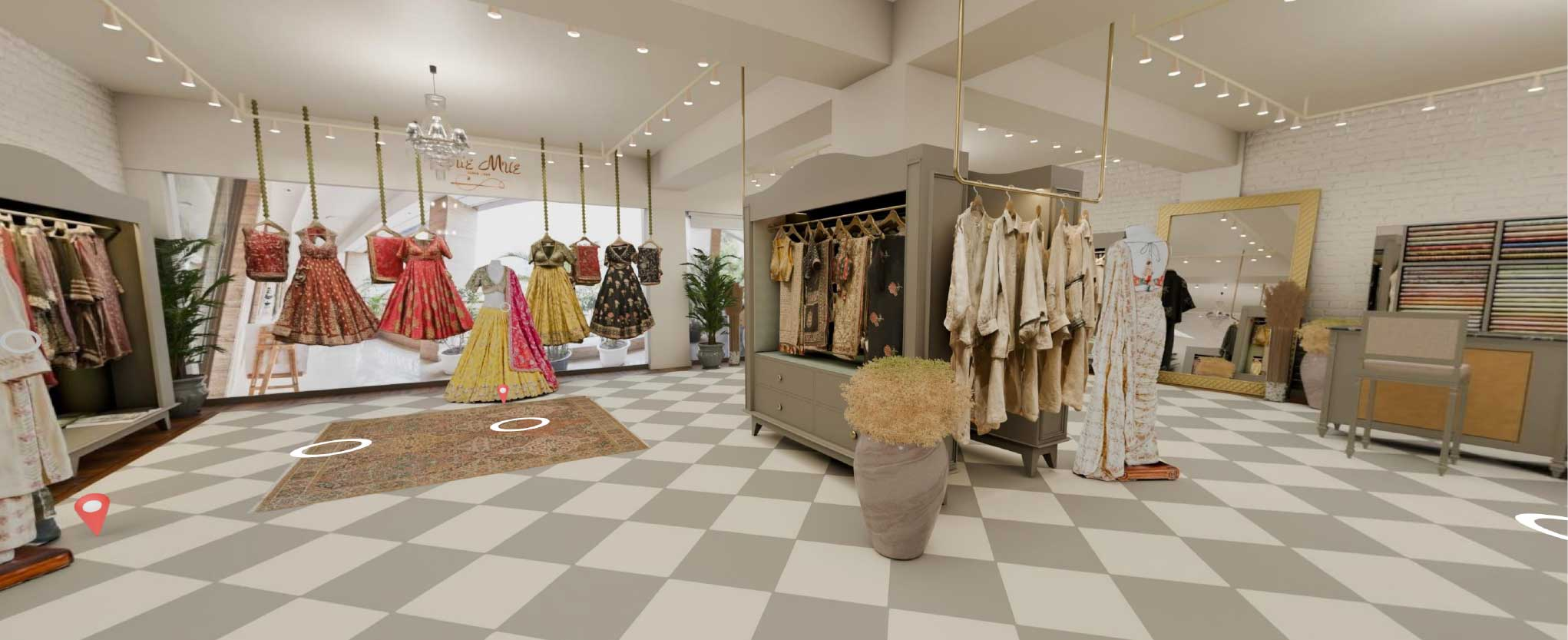
- Virtual showrooms
- Interactive product configurators
- Mobile shopping applications
- Social commerce experiences
- Digital marketing campaigns
- In-store smart mirrors
- Future spatial computing platforms
That makes AR an investment in a reusable digital ecosystem rather than a single customer-facing feature.
Final Executive Recommendation
If your priority is fast deployment with minimal asset creation, AI provides an accessible entry point into interactive commerce. If you operate in the luxury watch or fine jewelry market, the equation changes.
Products in these categories are purchased based on proportion, fit, craftsmanship, and visual confidence. Live spatial tracking addresses each of these buying considerations more effectively than static image generation.
For executives planning long-term digital growth, AR represents the stronger strategic investment because it supports richer customer engagement while building reusable digital assets that continue delivering value across multiple sales channels.
Conclusion
The future of luxury retail is no longer limited to beautiful product photography. Today’s shoppers expect experiences that help them visualize products with confidence before making a purchase.
Whether you choose AI-powered imagery or real-time augmented reality depends on your catalog, digital assets, and long-term business goals. AI offers a practical starting point for brands that want realistic visual previews with minimal asset preparation.
AR delivers a deeper level of interaction, making it the preferred choice for luxury watches and fine jewelry where scale, fit, and movement influence buying decisions.
Before investing, evaluate your existing digital capabilities and identify the technology that aligns with your customer experience strategy.
Frequently Asked Questions
Q.How does virtual try-on technology actually work? +
If you're wondering how does virtual try-on works?, the answer depends on the technology being used. AI-powered systems generate a realistic image from a customer's clicked photo, while AR systems use a live camera feed to position digital products in real time using computer vision and spatial tracking.
Both approaches help shoppers visualize products before making a purchase, but they serve different retail objectives.
Q.Which is better for luxury jewelry brands, AI or AR? +
For luxury jewelry, AR is generally the stronger choice because it provides accurate positioning, realistic scale, and live interaction. Customers can examine rings, bracelets, and necklaces from multiple angles, helping them make more confident purchasing decisions.
AI remains a valuable option for brands that want high-quality visual previews without building a complete library of 3D assets.
Q.How does virtual jewelry try-on work for online shoppers? +
Many retailers ask, how does virtual jewelry try-on work in a real shopping environment. Modern AR platforms recognize key body landmarks such as wrists, fingers, ears, and necklines.
They continuously track these areas while positioning digital jewelry with realistic proportions, allowing shoppers to move naturally and inspect products from different perspectives before buying.
Q.Do retailers need 3D models for every virtual try-on solution? +
No. The answer depends on the technology you choose. AI-based platforms often work with professional 2D product photography to generate realistic preview images. AR platforms typically require optimized 3D models because they render products dynamically within a live camera environment.
Q.Can virtual try-on improve online sales? +
Yes. Interactive visualization helps shoppers understand how products may look before purchasing, reducing uncertainty during the buying journey. Increased confidence often leads to higher engagement, stronger purchase intent, improved conversion rates, and fewer product returns, especially in premium retail categories such as watches, jewelry, and eyewear.